Premium metal drinkware built on the visual language of the garage. Pistons as wine caddies, engine geometry translated into glassware forms.
Role
Creative Direction · Brand Identity · Industrial Design
Project
Self-Initiated Concept
Industry
Lifestyle · Drinkware · Automotive
Deliverables
Identity · Packaging · Product · Campaign
Tools
Brand Design · AI-Directed Visualization
The product was never the problem. It was the world around it.
Challenge
A drinkware line with nothing physical to photograph, and no way to build the imagery that makes drinkware feel like culture instead of inventory.
Approach
Names pulled from the garage, a palette read off a parts catalog, type set like it was stamped into metal rather than printed.
Outcome
A packaging architecture and a full lifestyle campaign. Still a concept. It stopped looking like one.
First attempt · 2017

2017. Dimension lines and all.
I photoshopped a five piece collection in 2017 and waited for the right tools to tell the full story. Without physical prototypes and a real shoot budget I could not build the lifestyle campaign this brand needed: vintage cars, poolside scenes, bar setups.
The forms had to work before the brand could.

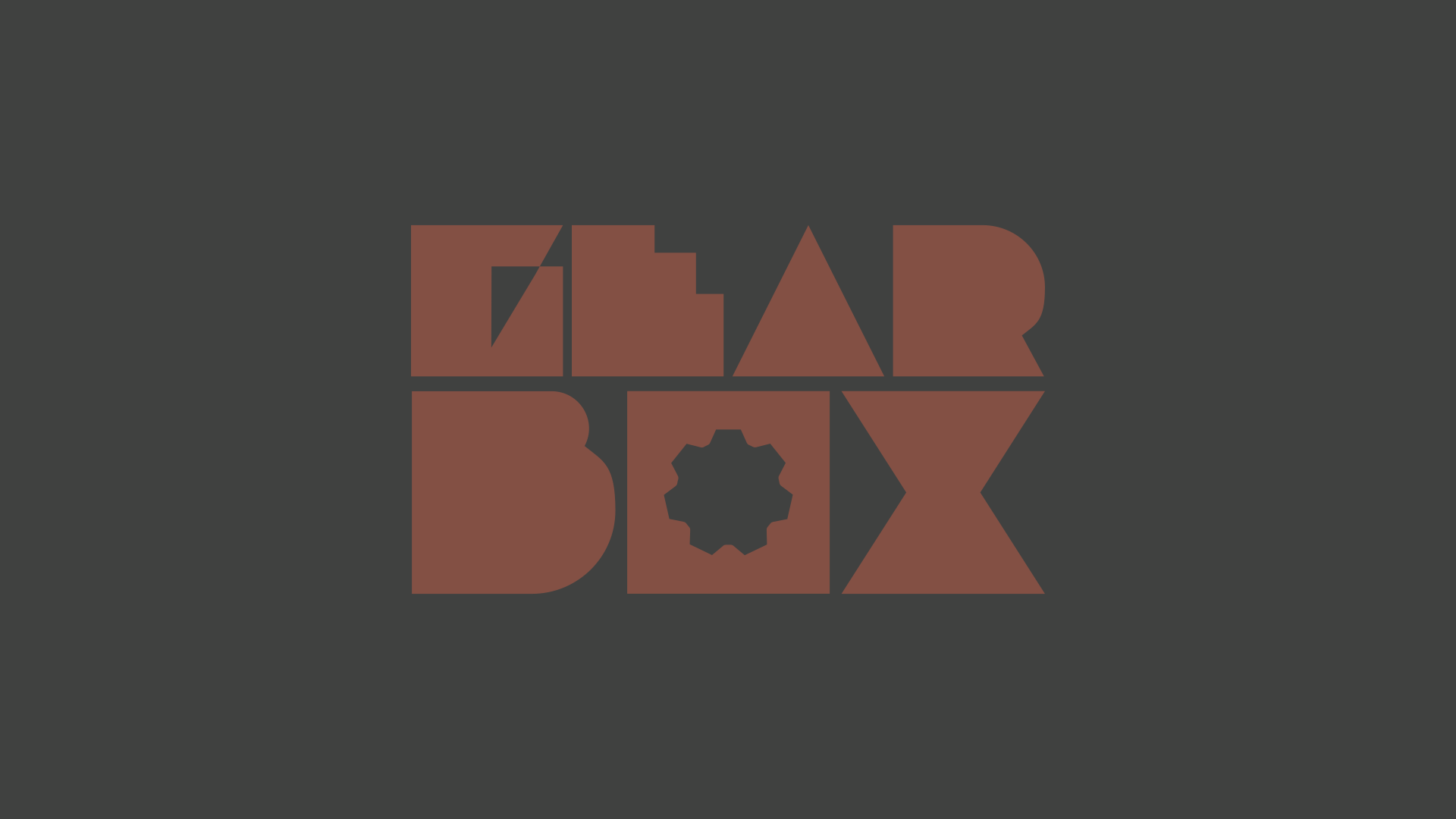
The full lockup. The O is a cog, the X is two wedges meeting.
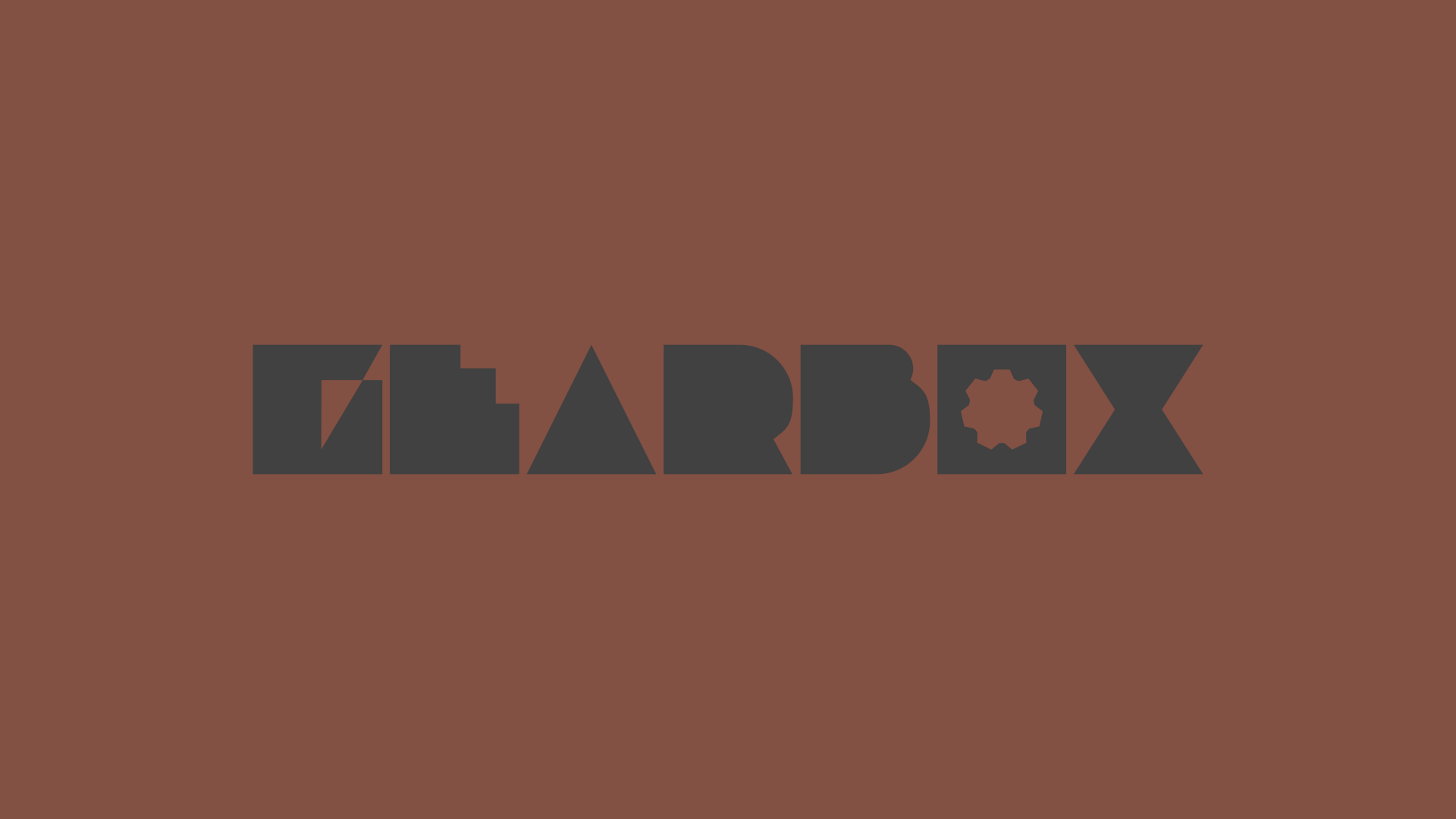
The wordmark. Compressed and tight, set like it was stamped into metal rather than printed.

Reduced to one cog. Small sizes get the part, not the word.
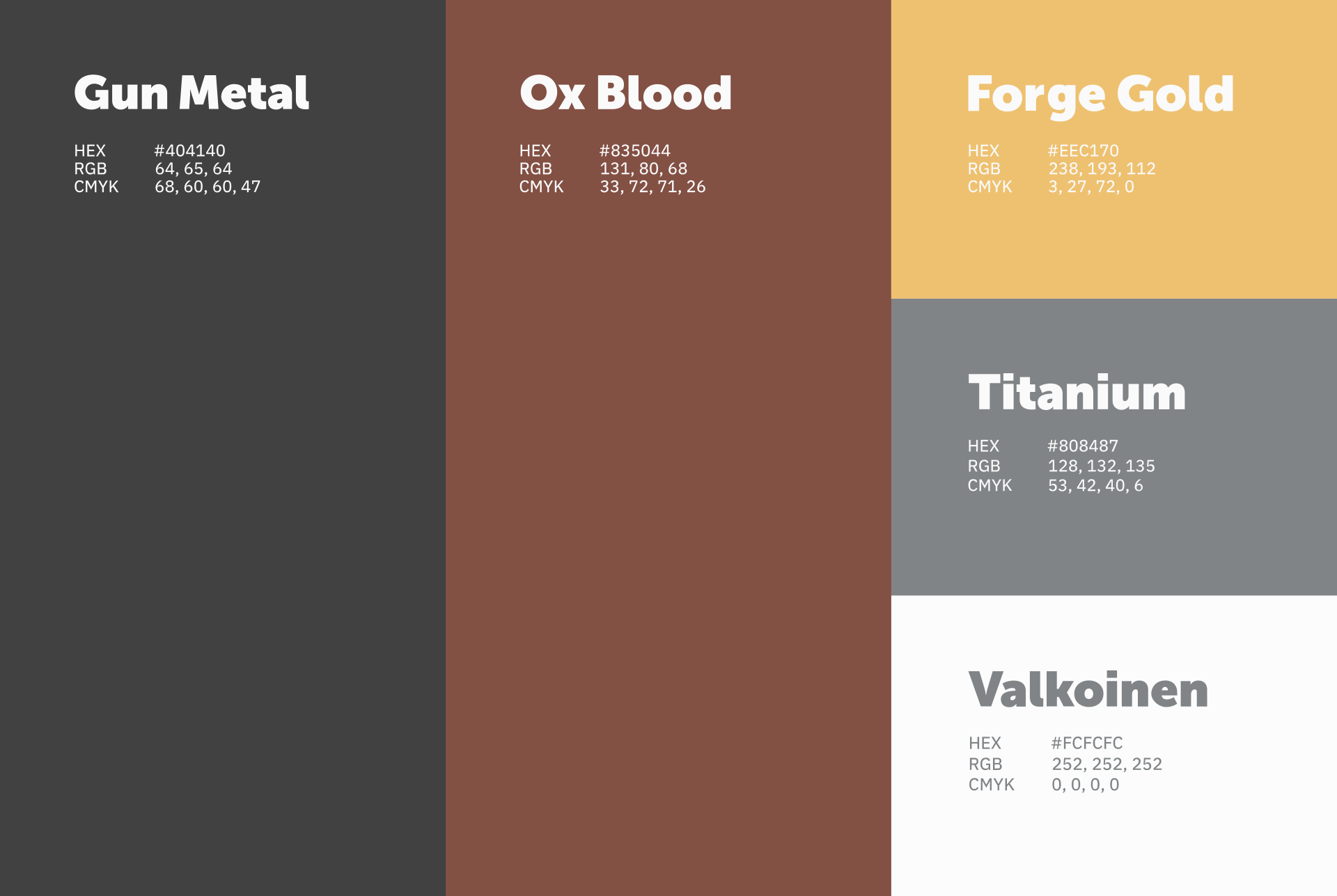
Matte black, raw aluminum, oxidized bronze. A parts catalog, not a mood board.
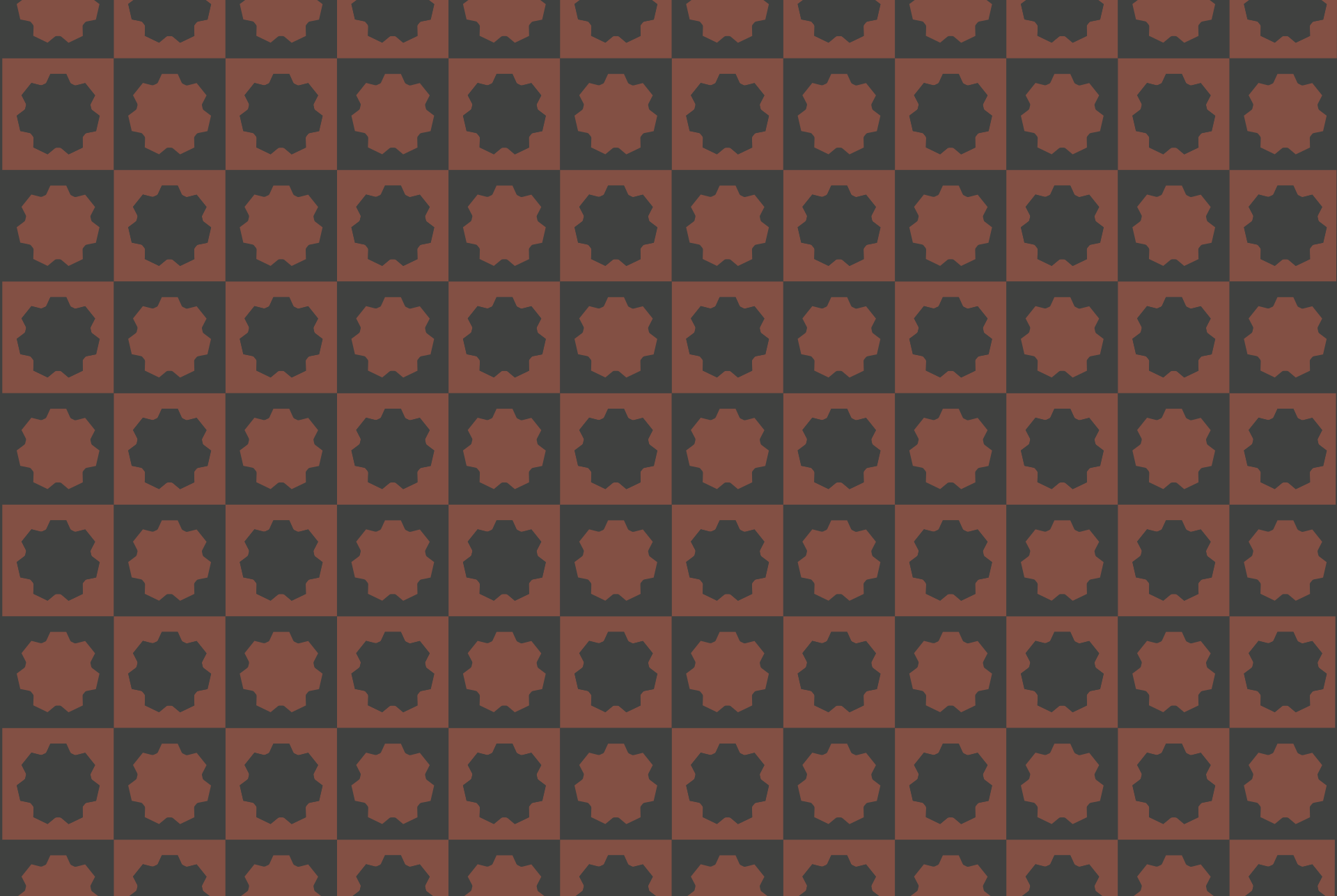
Branded pattern. Gear silhouettes on a checkerboard.

Graphic element. The radial motif, used as a stamp.

Letterhead. A fingerprint under a scribe.

Letterpress card. The rosette carries the brand wherever the wordmark will not fit.
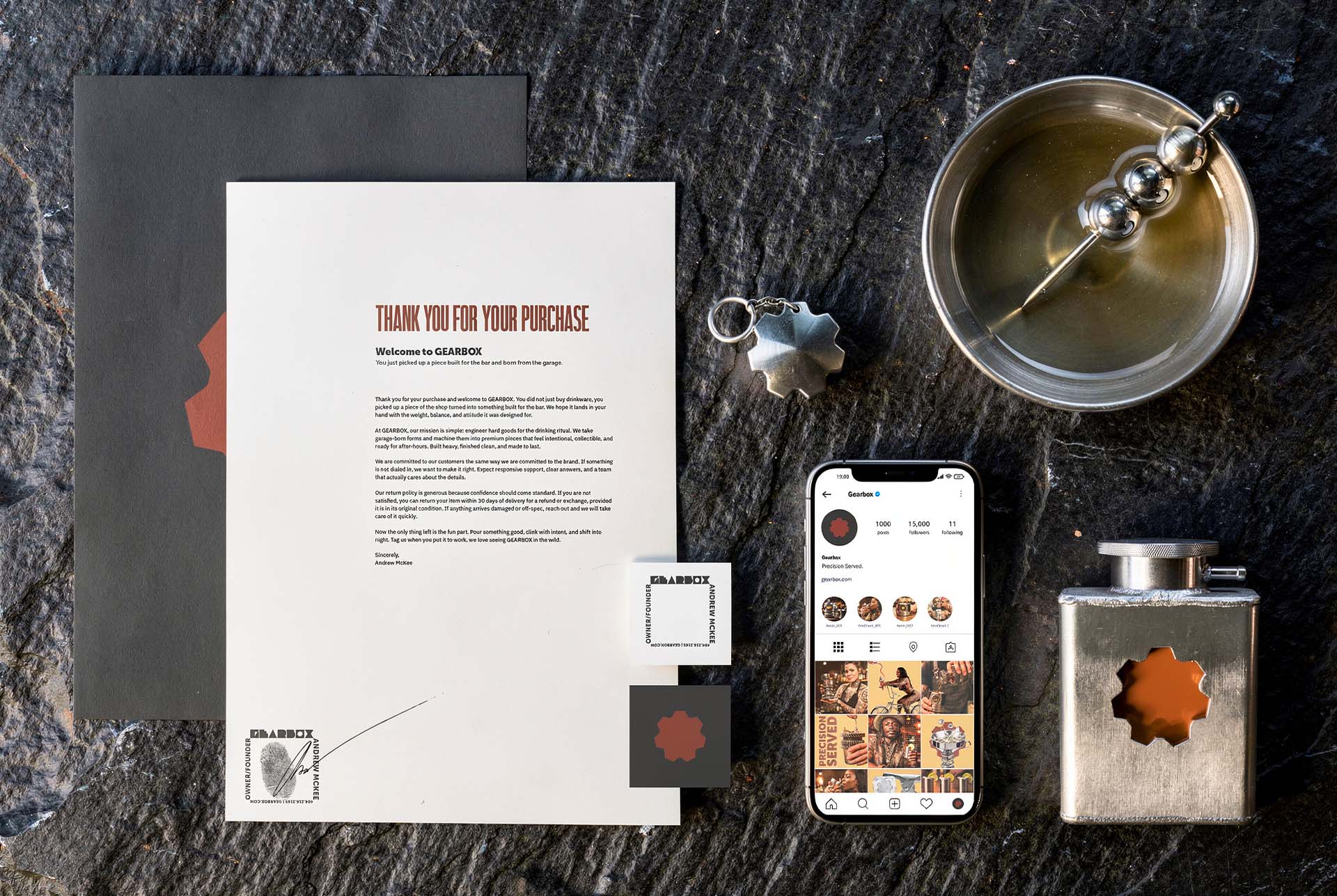
The unboxing kit. The letter, the keyring, the card and the profile all have to sound like the same company.
Strategic insight
Gearbox feels like one brand because every decision points the same way.
The names come from the garage. The palette reads like a parts catalog: matte black, raw aluminum, oxidized bronze. The type is compressed and tight, set like it was stamped into metal rather than printed. None of it is decoration. It all describes the same world, which is usually the thing a concept is missing.
The Foundry · Glassware
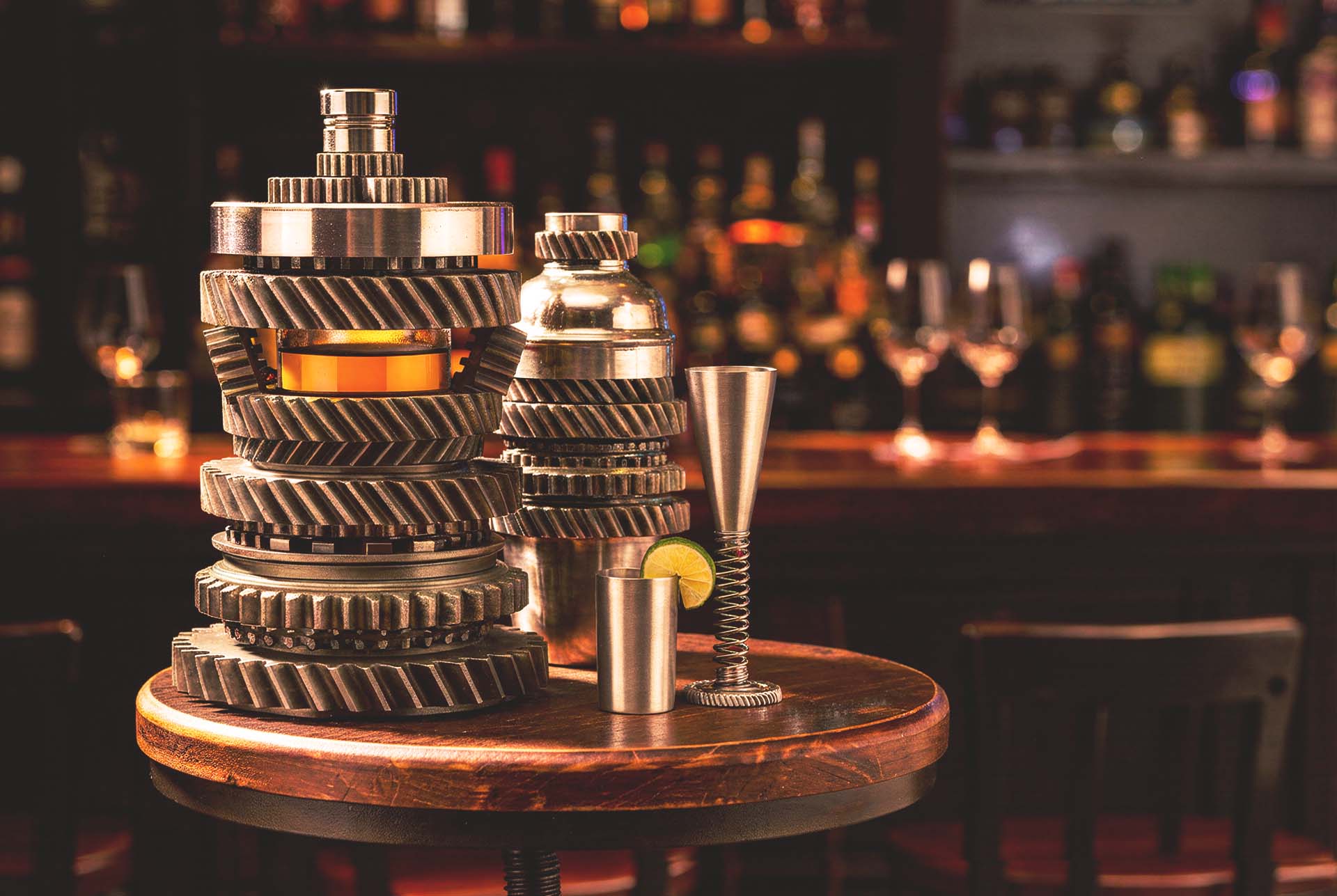
The shaker. Stacked gear bodies.
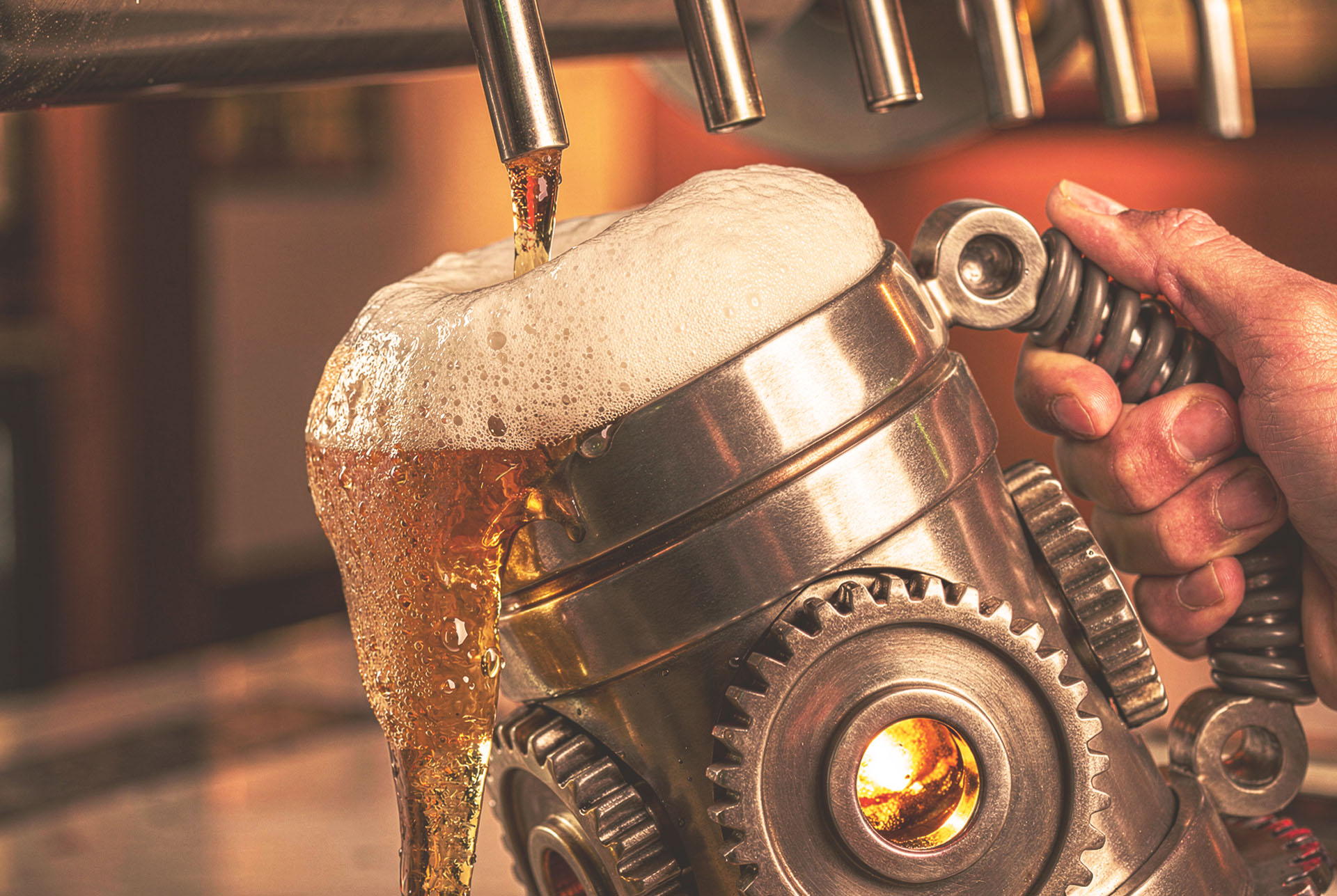
Coil handled stein, gear, golden hour.
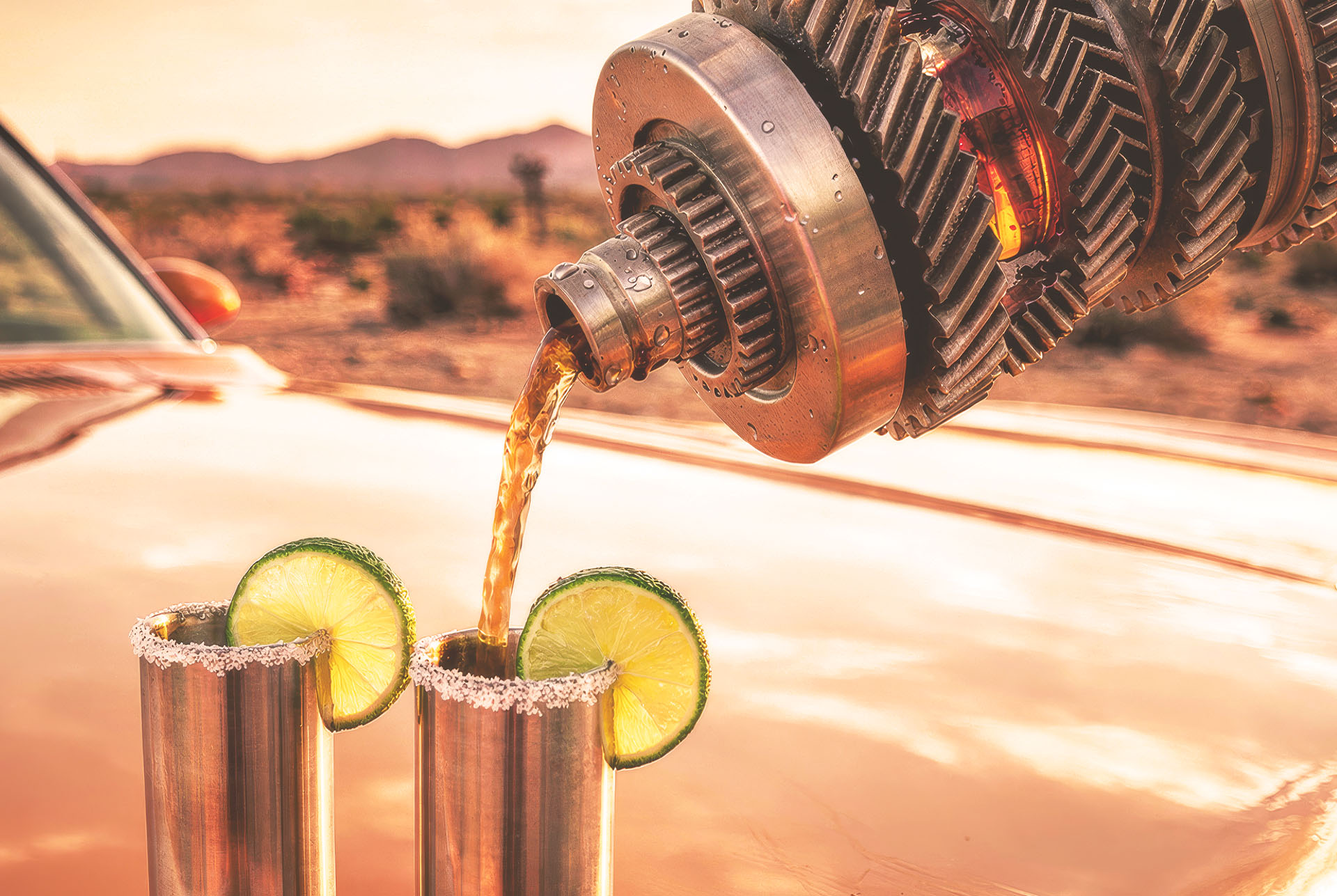
The pour. Gear spout, salted rims.

Piston stem, shaker, hex flask. Oxblood hood.
The Shift Kit · Bar tools
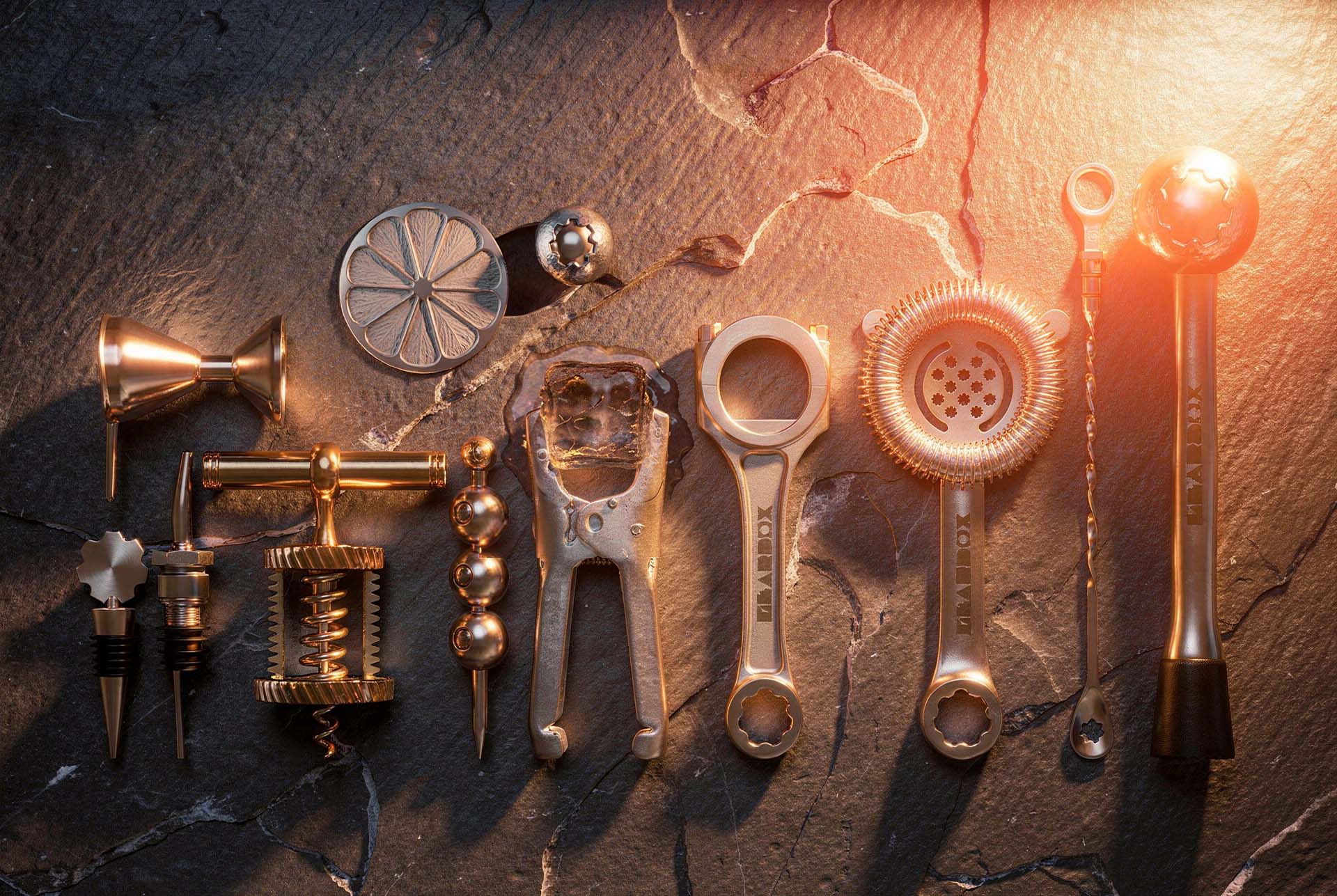
Laid out like a parts tray. Bar tools drawn straight from the toolbox. Precision served.

Every tool is a part first and a tool second.
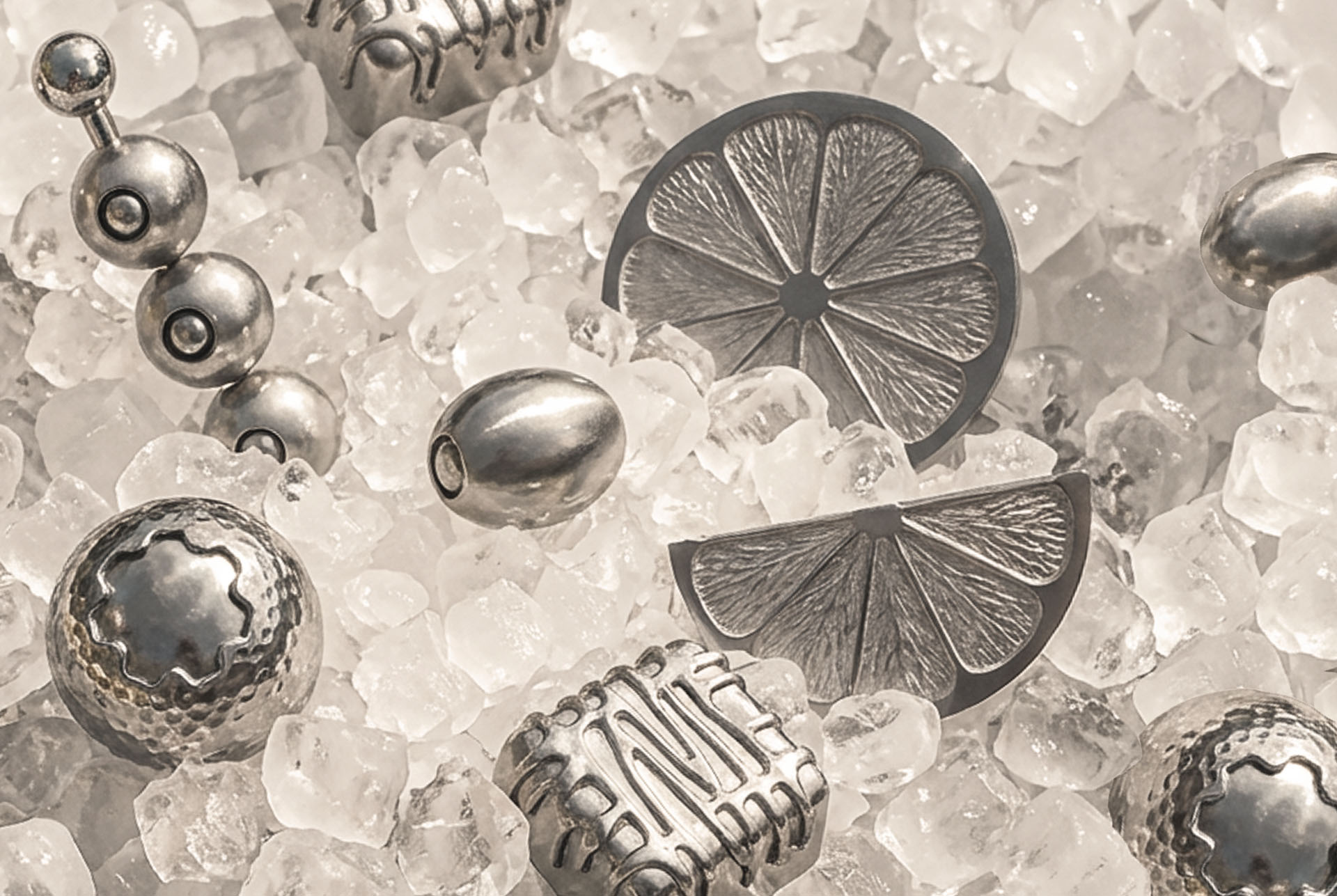
Titanium ice, cast as gears and sprockets. Even the garnish is machined.
The Bracket · Wine caddy
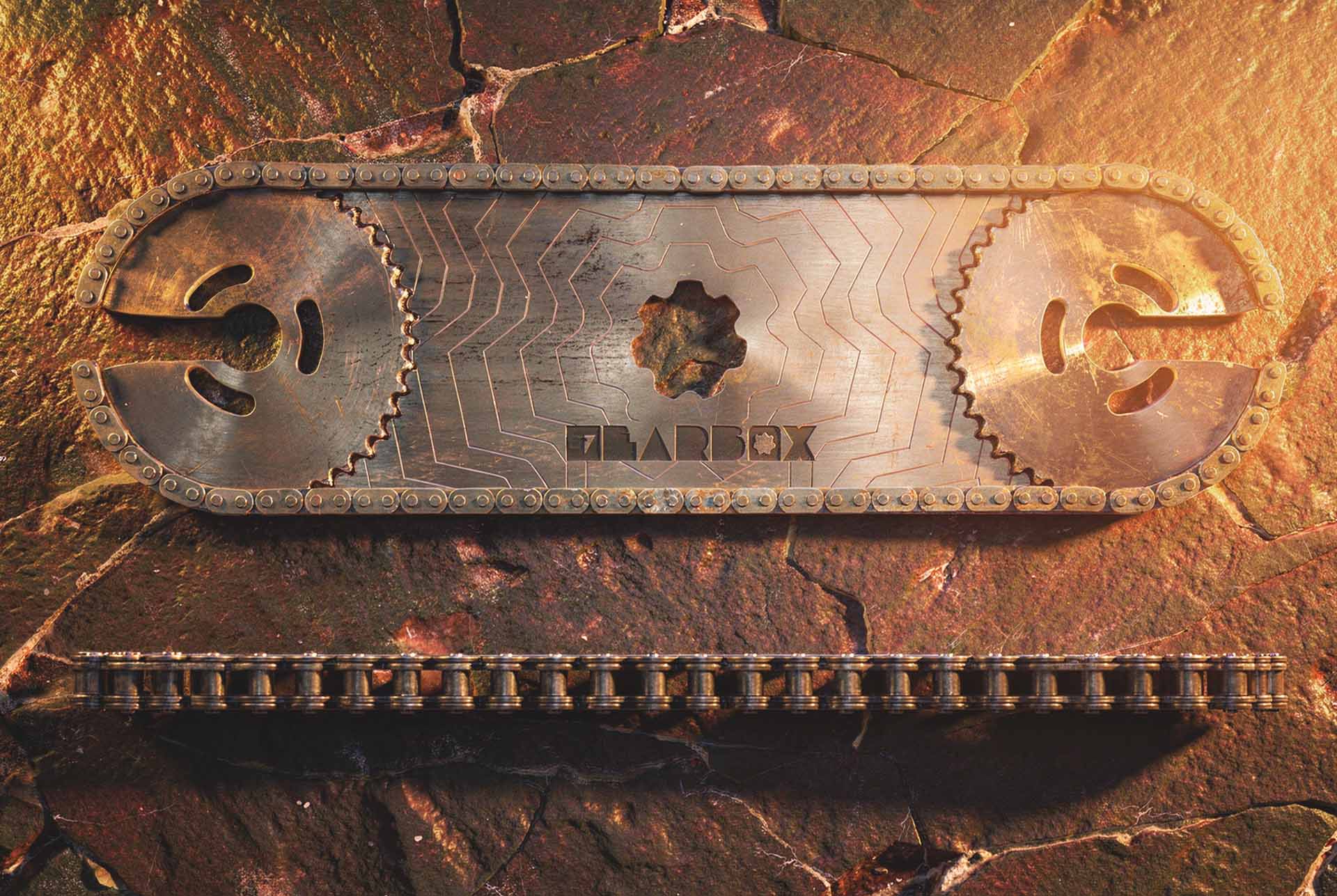
The deck. Sprocket, chain and the etched mark, machined flat because the magnets need a clean surface.
The bottle drops through a cut slot. The deck is magnetic, so any Gearbox piece parks on it and stays there, and slits along the edge hold ordinary stemware by the foot.
Magnets for the line, slots for everything else, because the person you are pouring for should not have to own the brand.
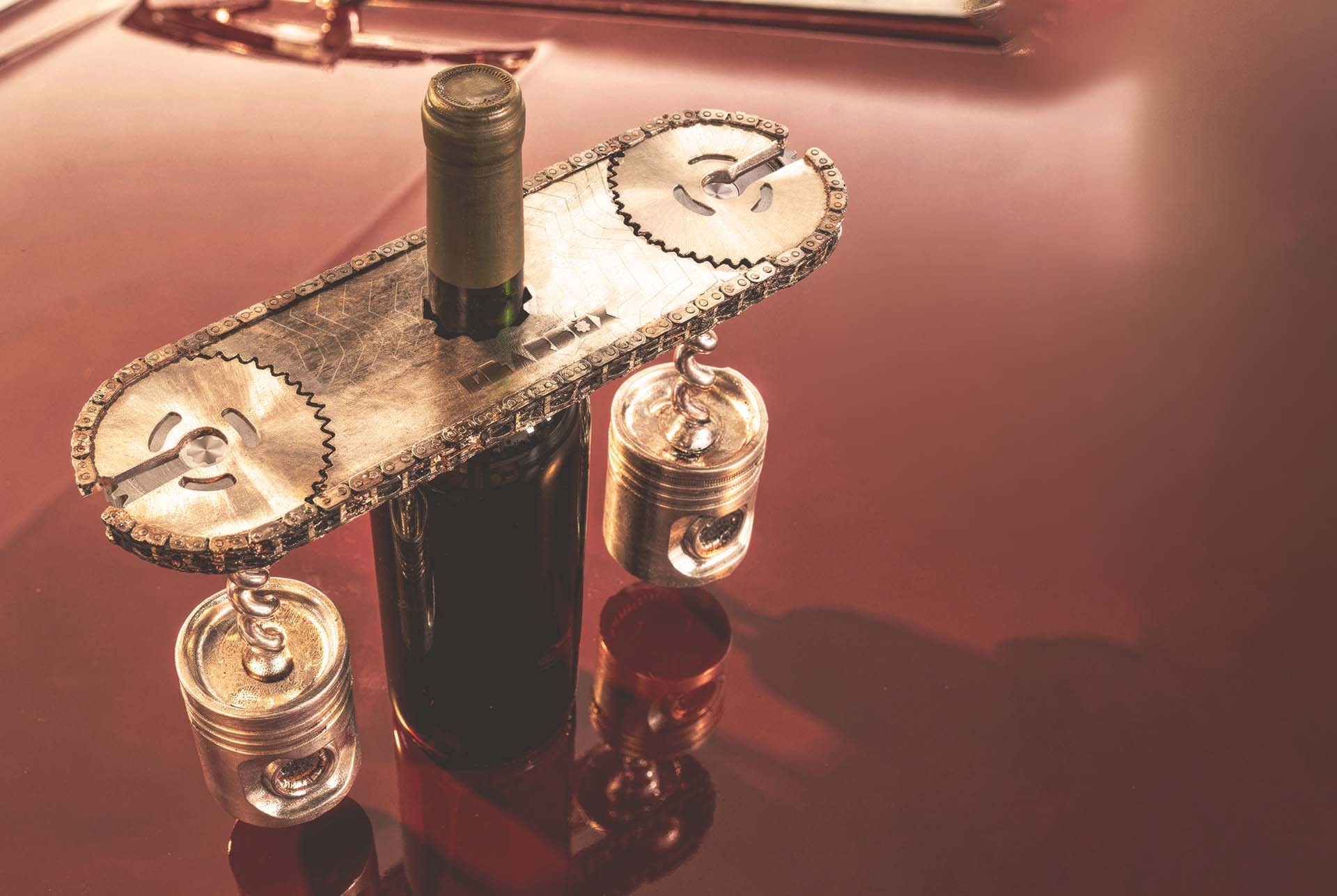
A piston bodied corkscrew holds itself to the deck. No hook, no rack, nothing to lose.
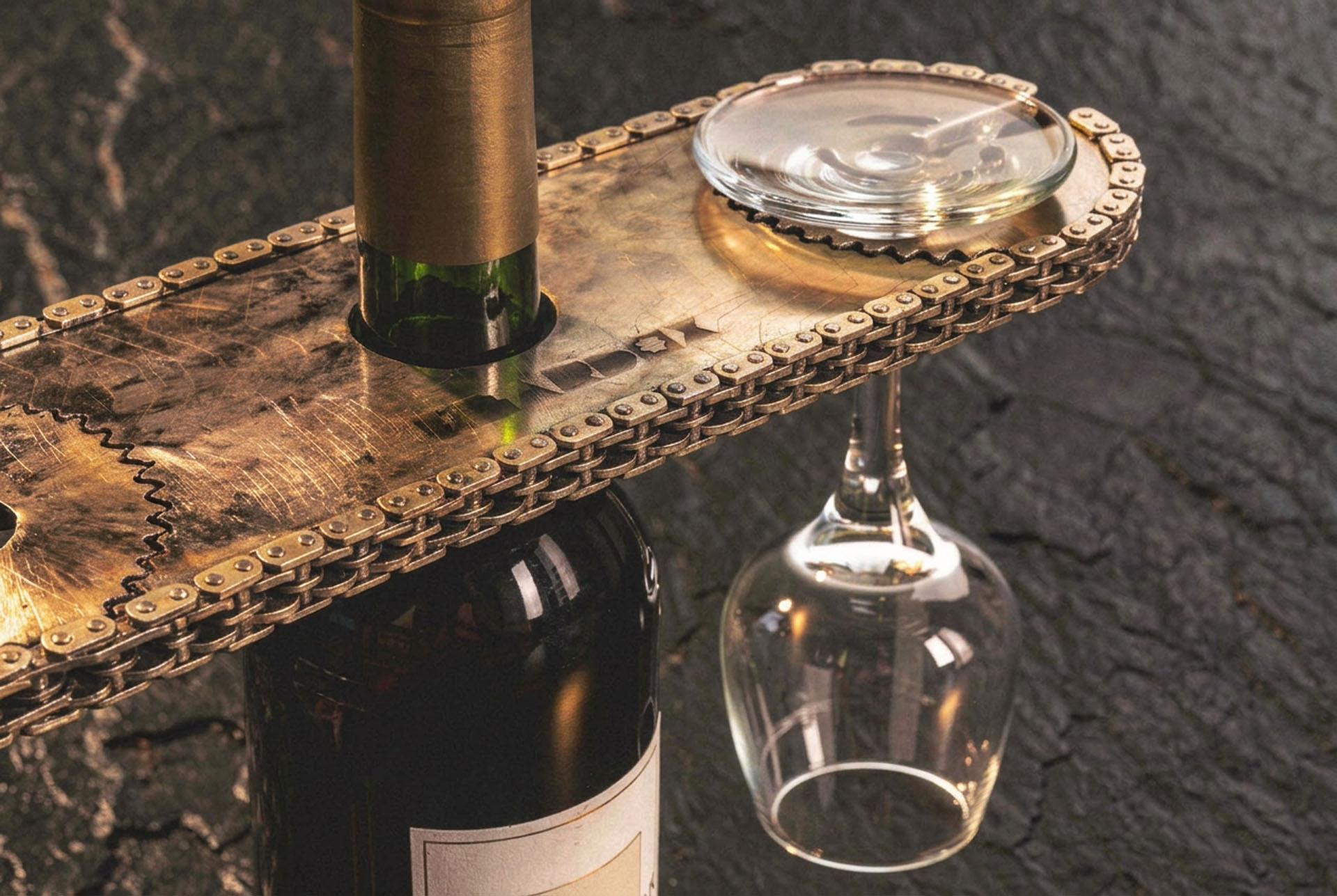
In service. An ordinary glass hangs by its foot from a cut slit.
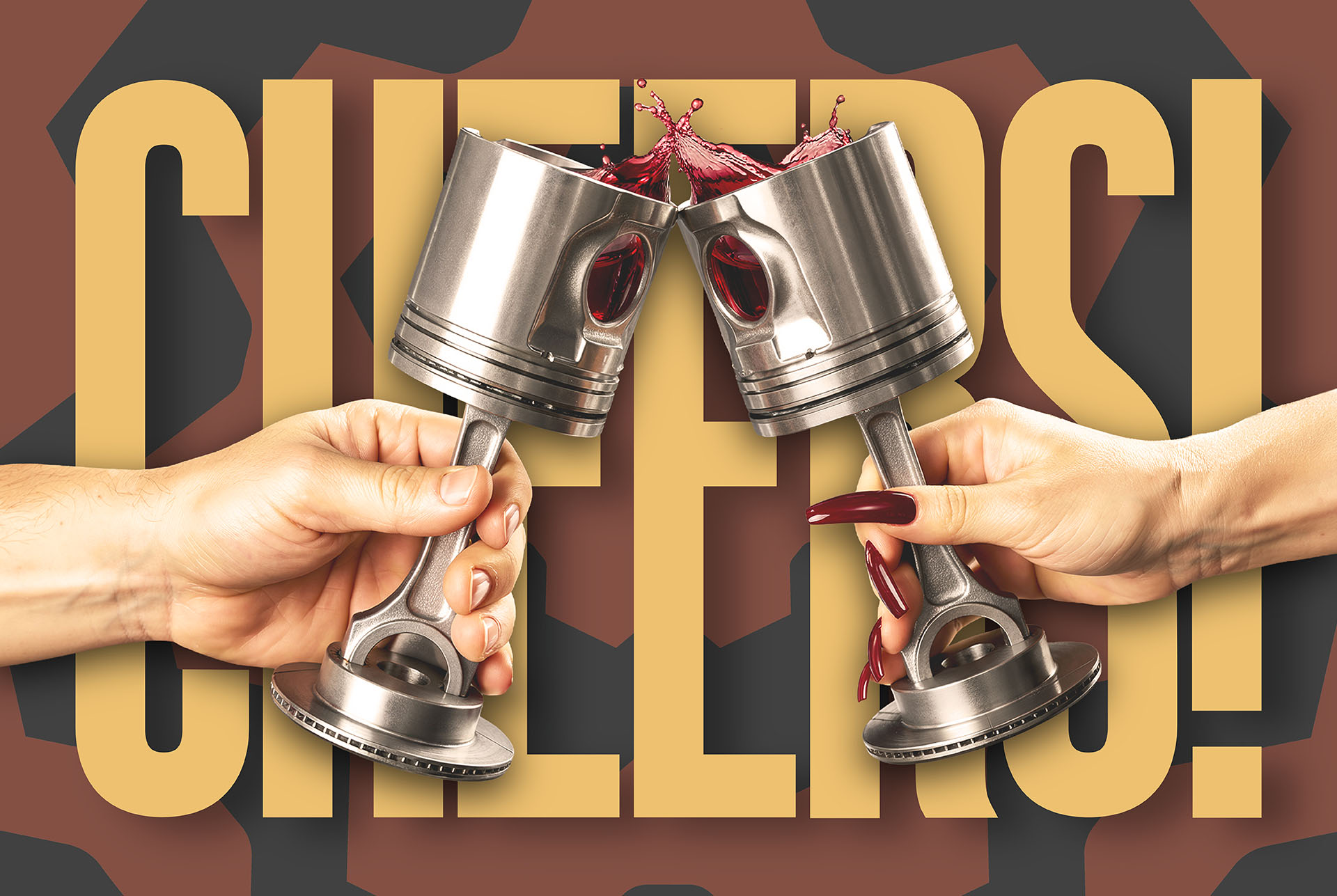
The concept looked like a concept. Then it didn't.
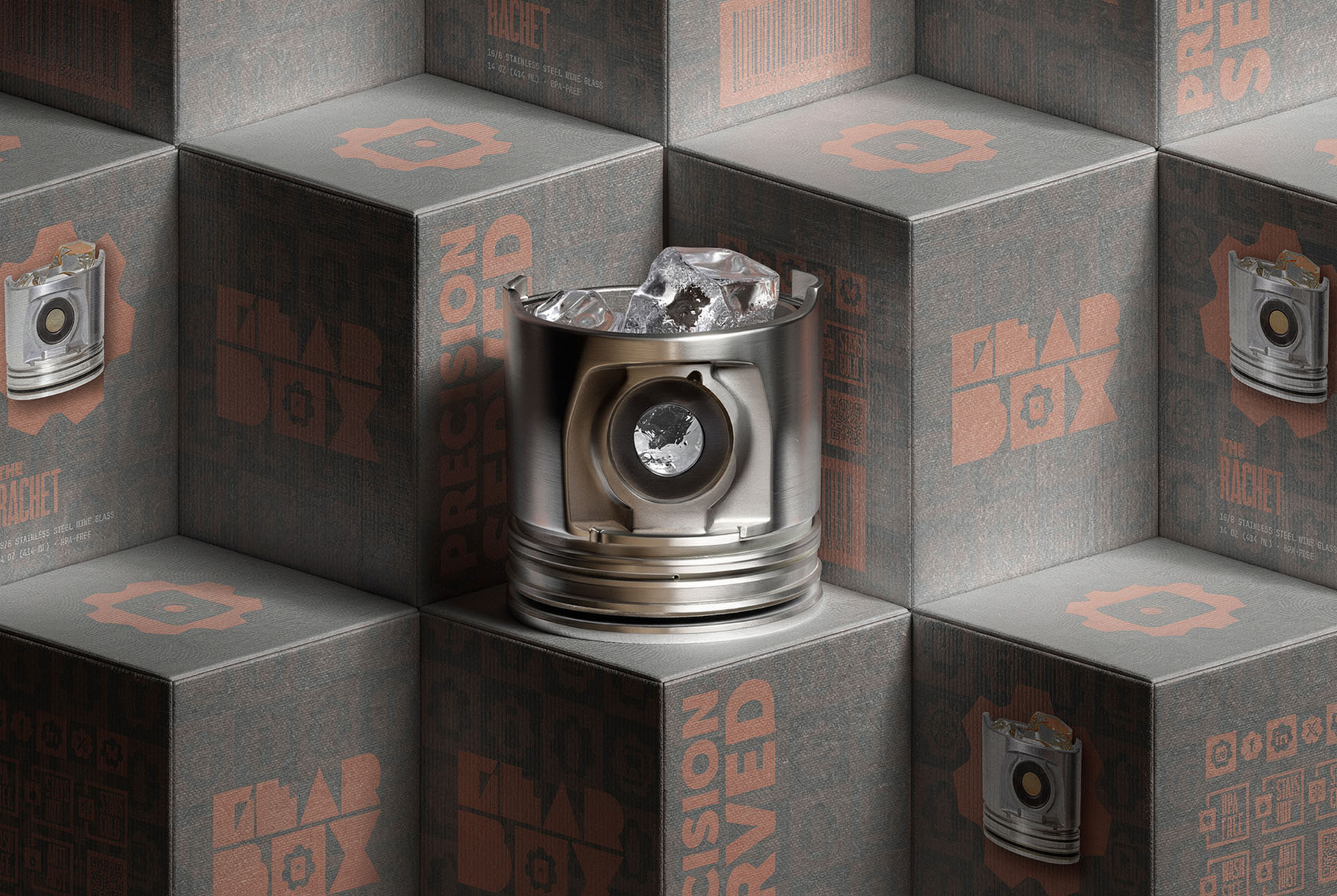
Each box carries the silhouette of what is inside. Stacked, the line reads as one wall.
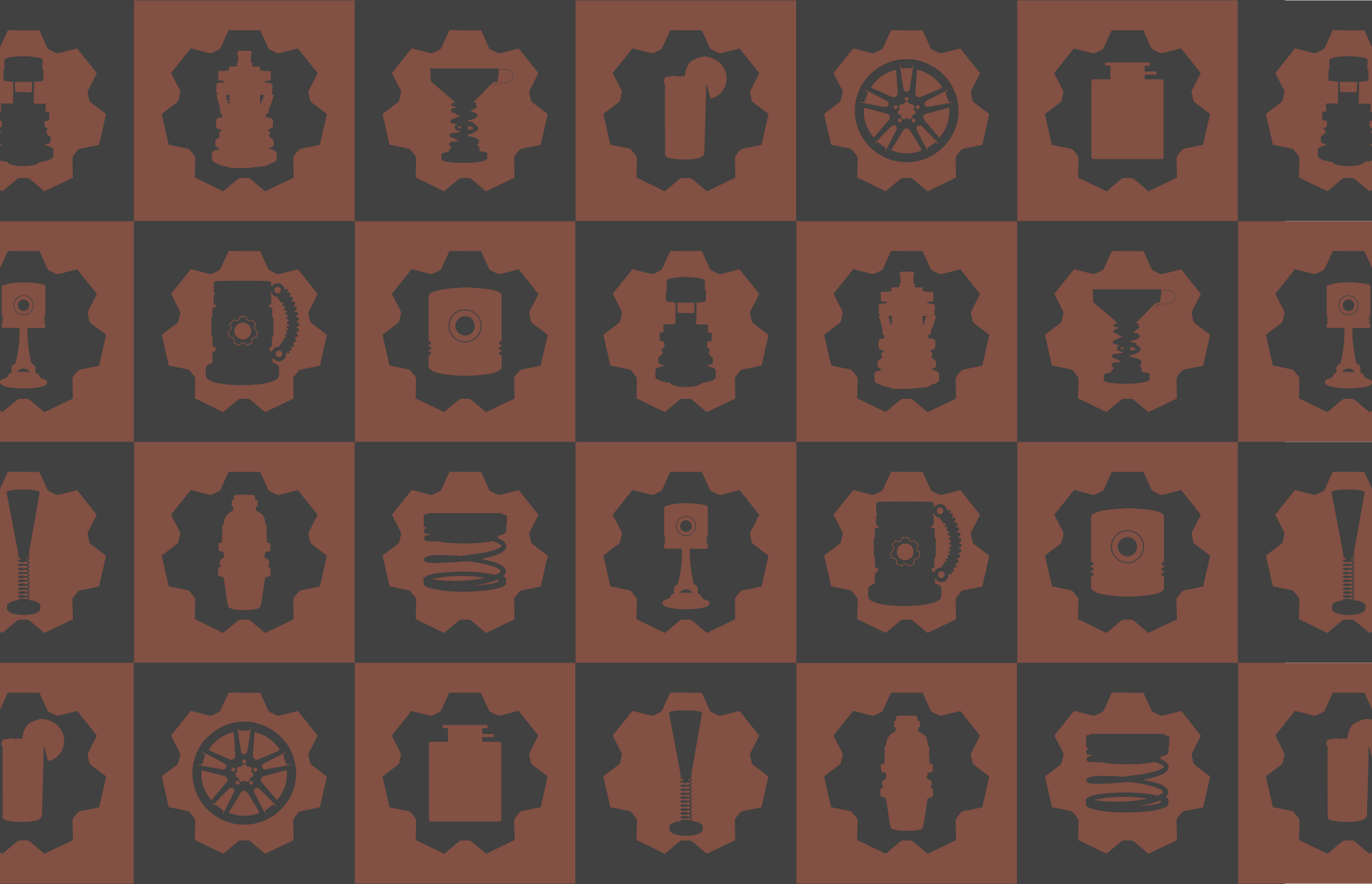
The marker icons. One per product, so the system scales.
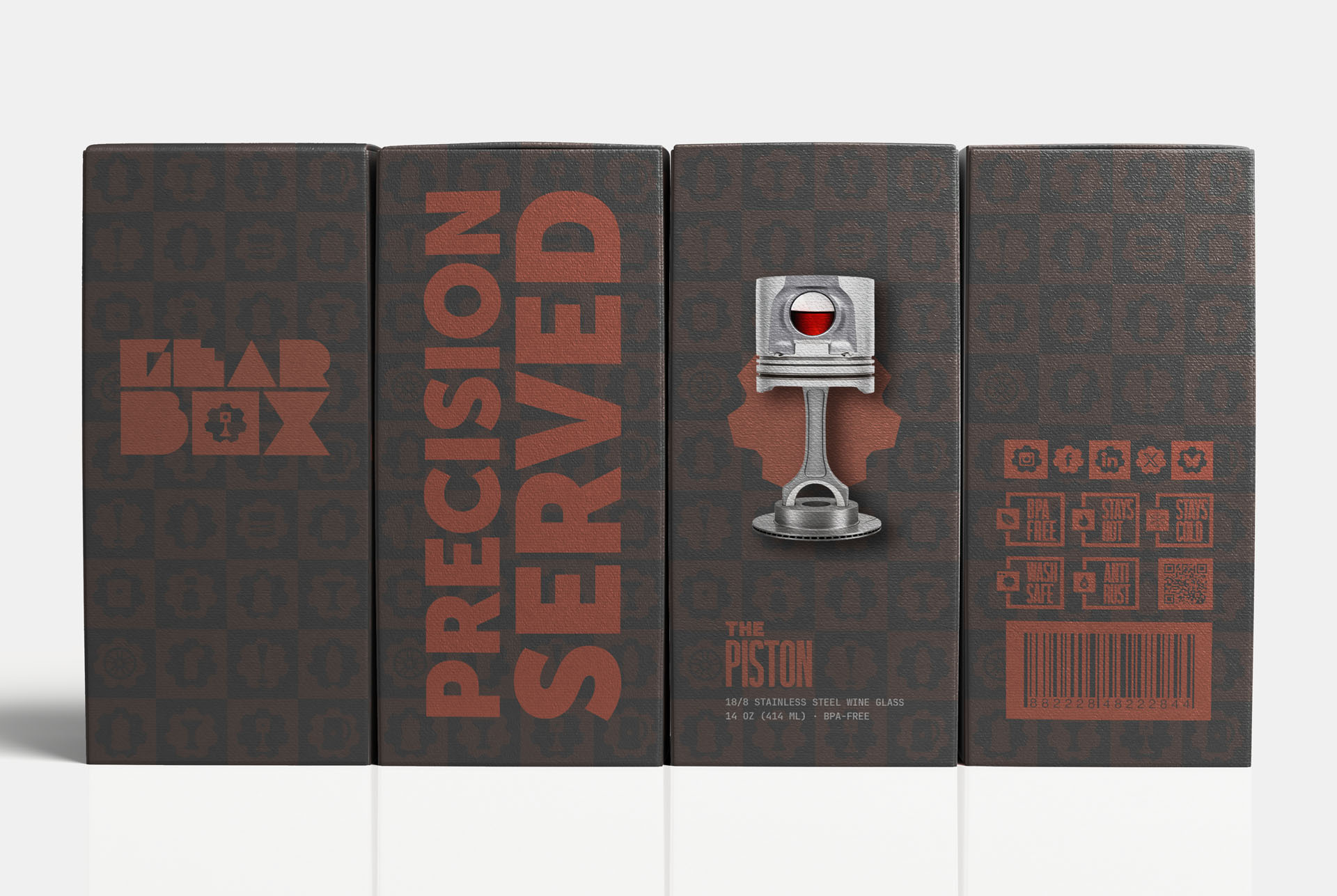
The Piston.

The Torque, beside the tankard it holds.
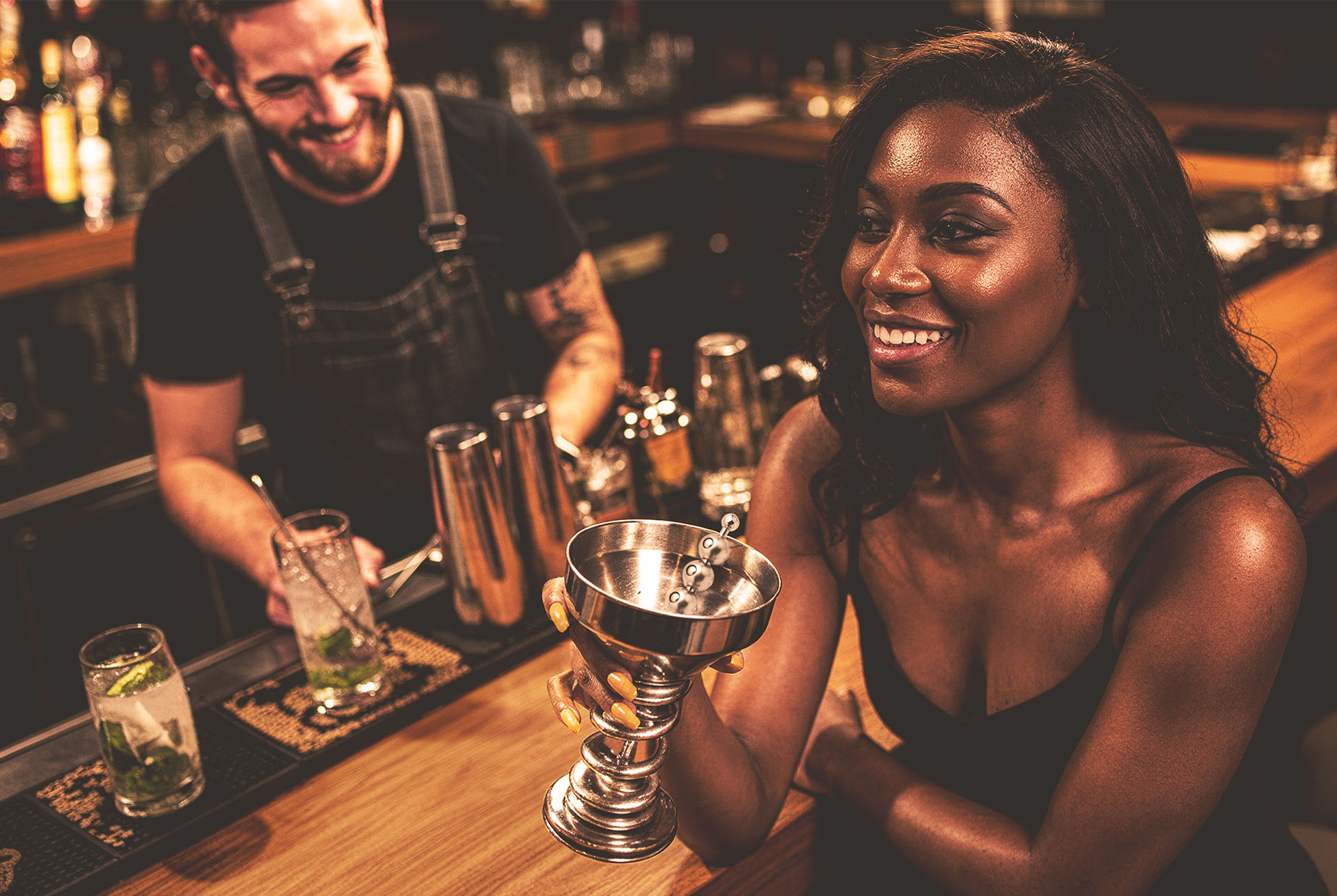
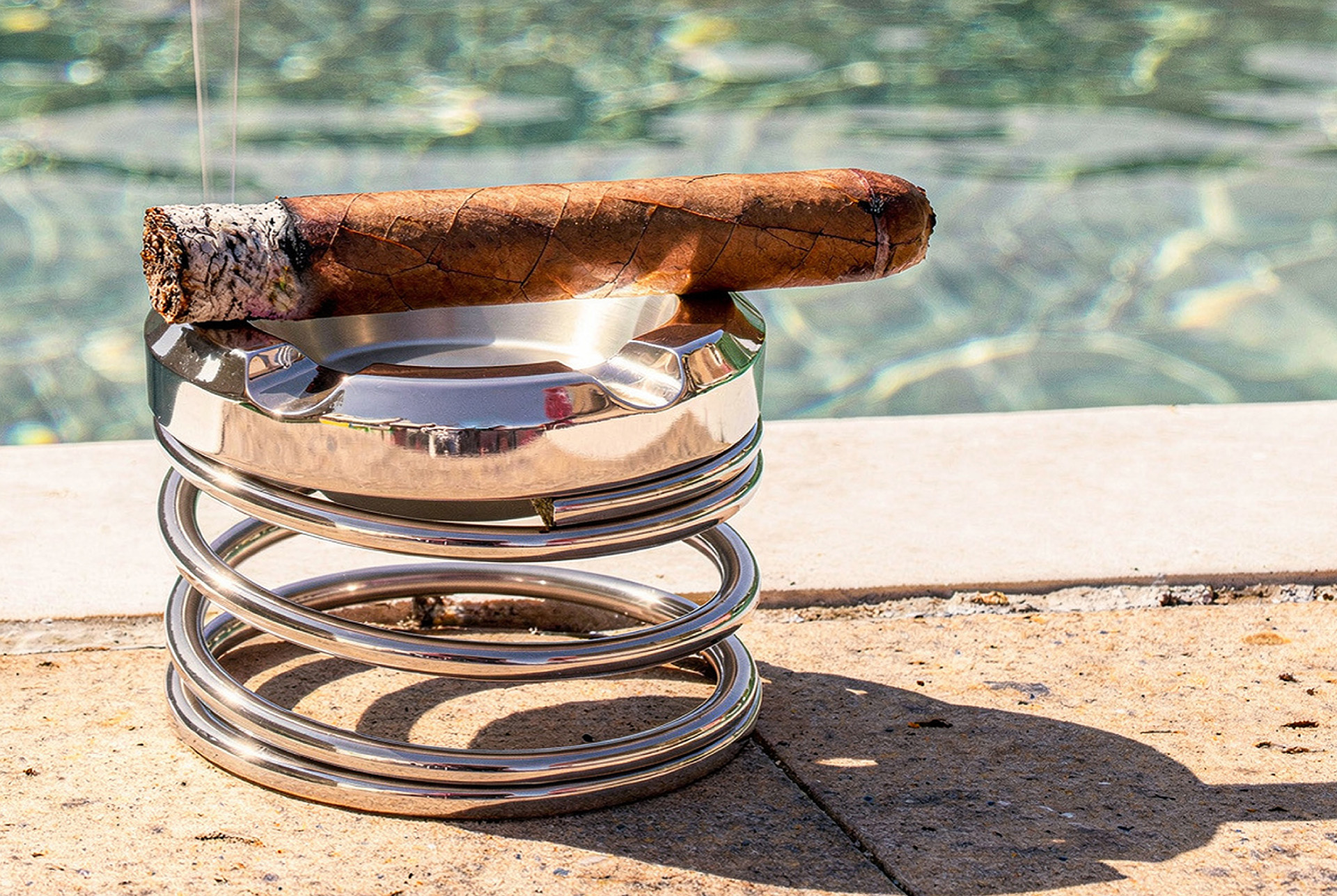
Coil stem cup, metal straw. Drinkware as culture, not inventory.
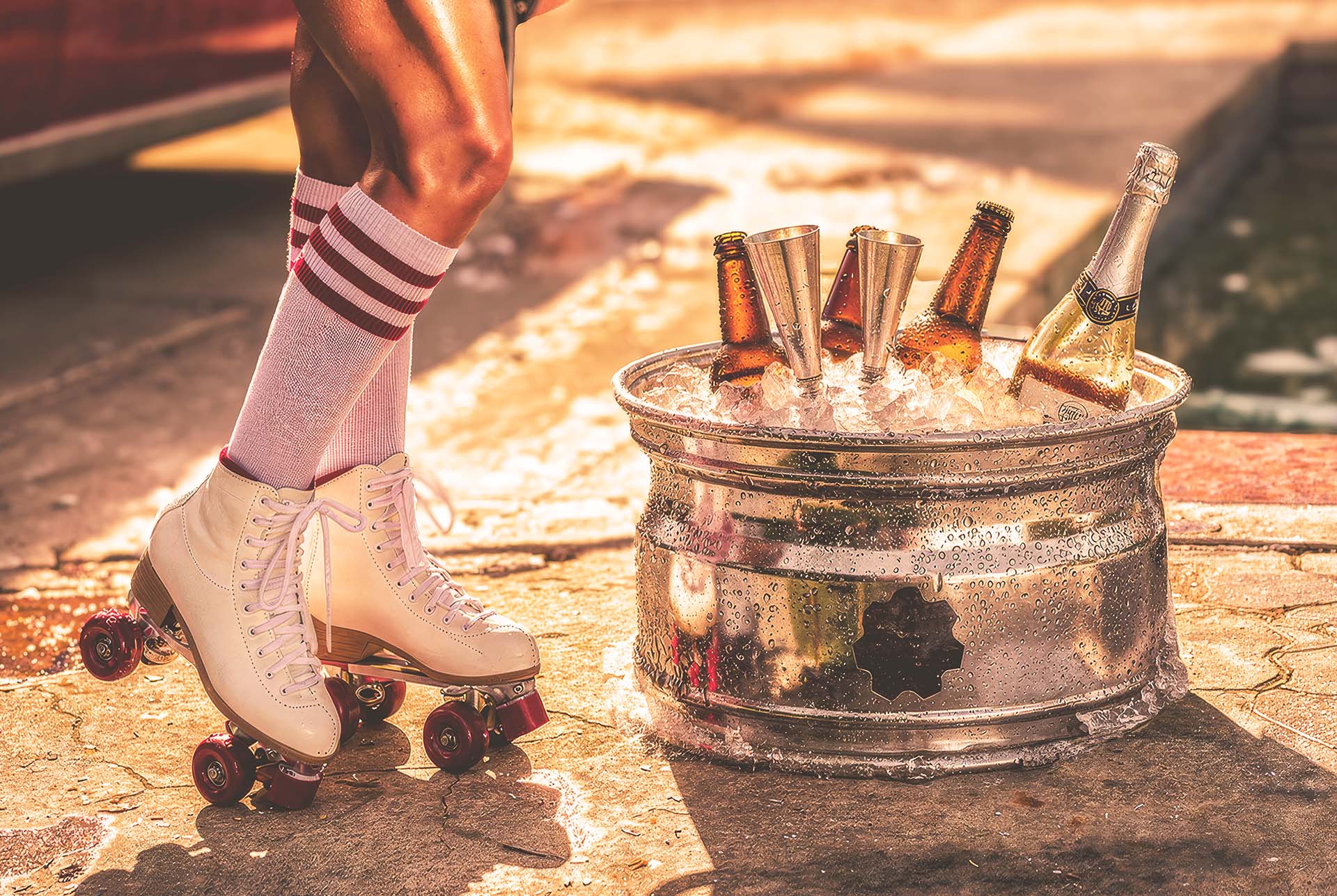
Car rim ice bucket, poolside. The part outlives the car.
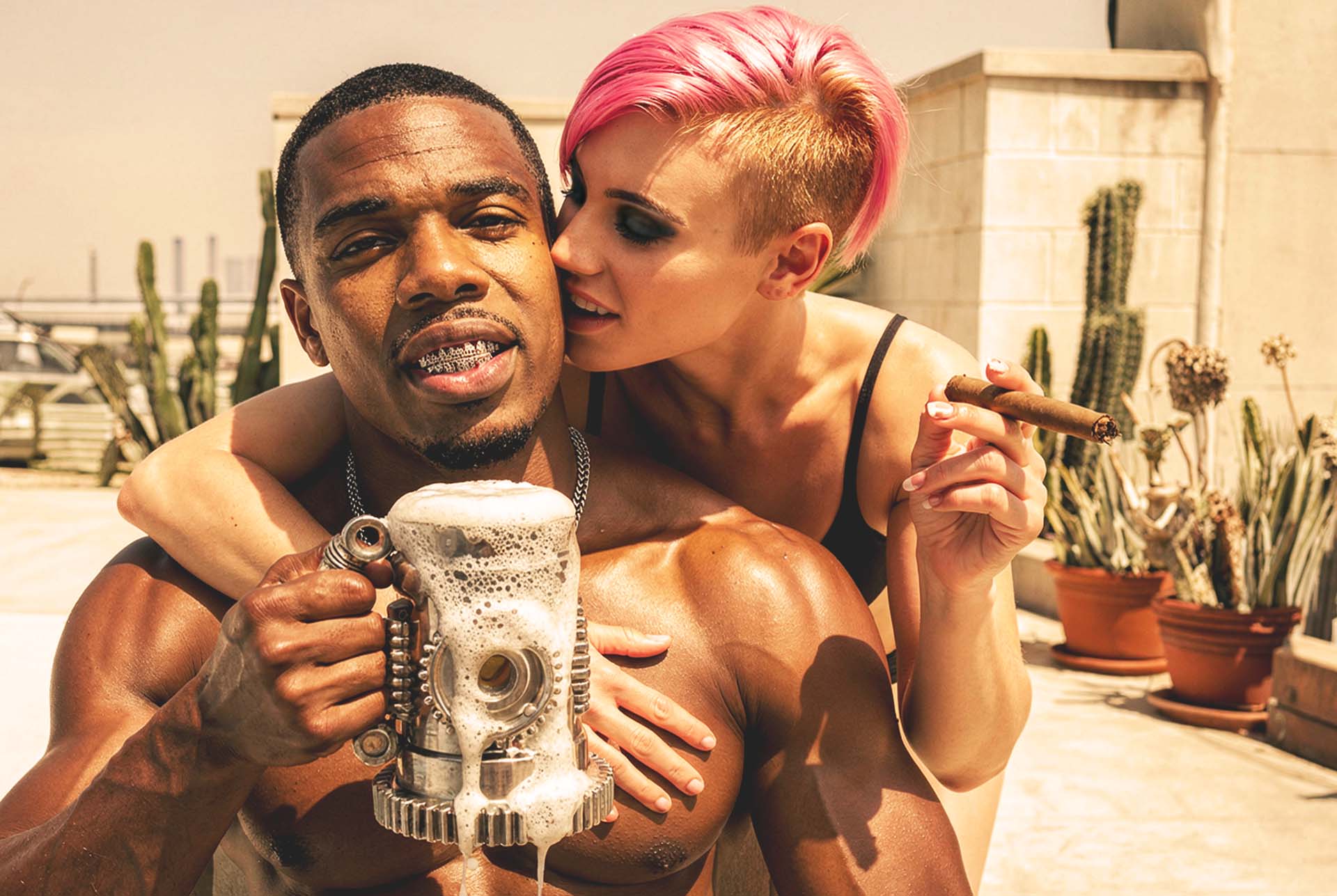
Gear ring tankard, coil handle, desert patio. The world the 2017 version never got to have.
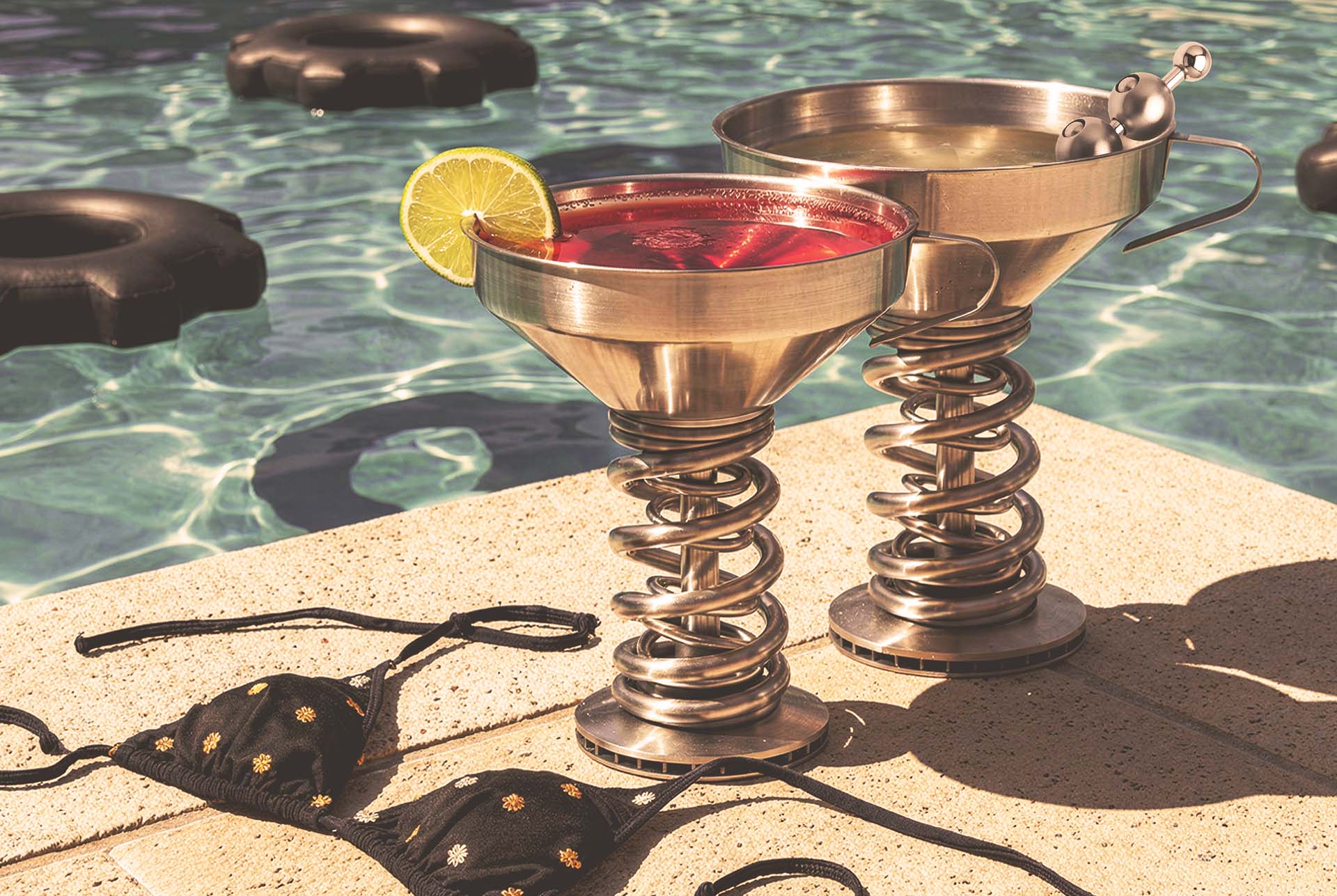
Coil spring stems on a pool deck. The palette holds in full sun.
On method. Gearbox was a long standing passion project. The identity, logo system, product concepts and creative direction are mine. In 2025 I came back to it with generative imaging and treated AI like a production studio: I art directed every scene, the lighting, the camera angle, the product placement, the reflections on metal. The tools handled what a shoot budget could not.
Every project on this site started with an email.