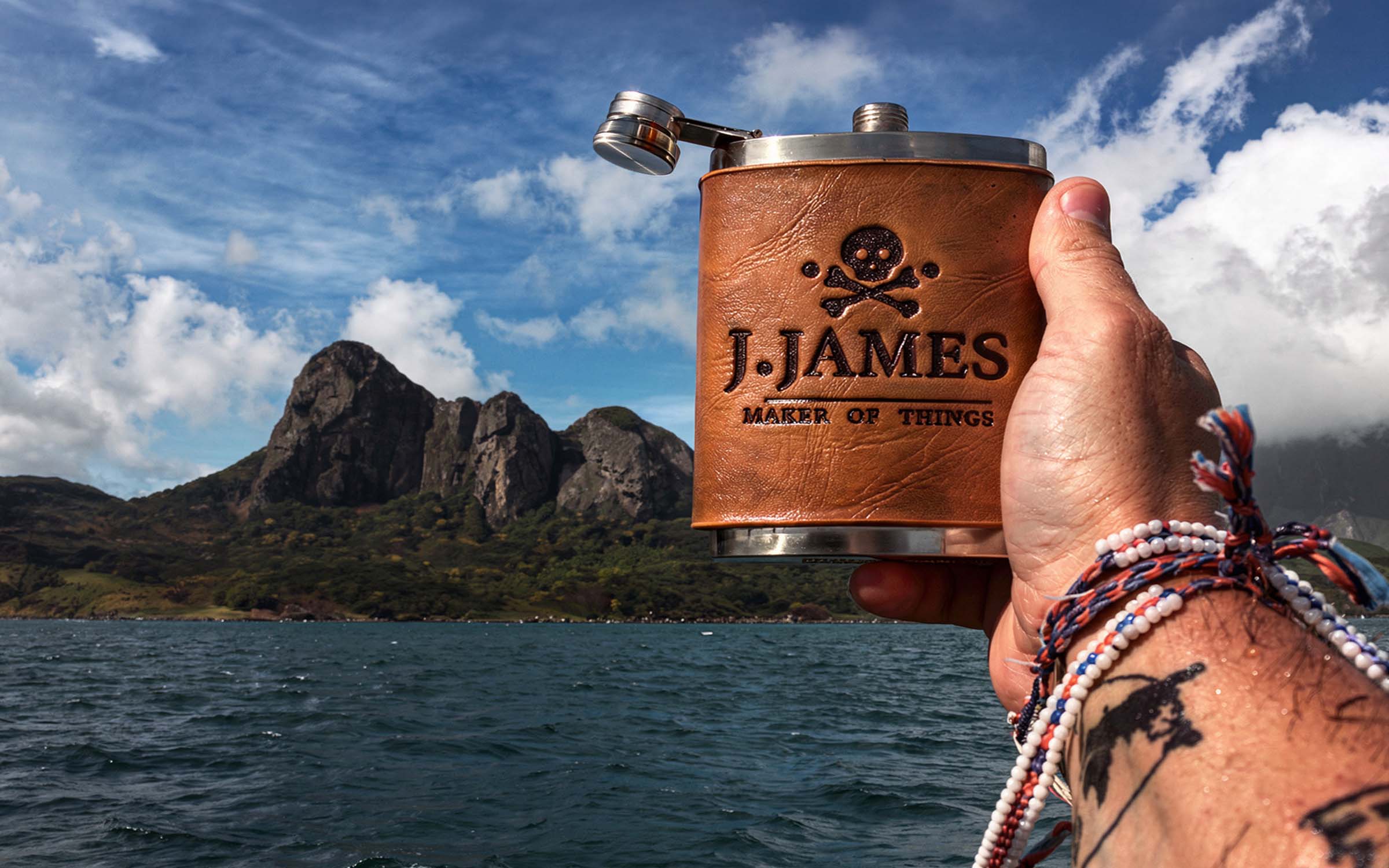
One fifteen second sketch the client told me not to fix, and two years of apparel, leather, packaging and two storefronts built on it.
Role
Creative direction · Brand identity · Apparel graphics · Product design
Client
J. James Maker of Things · Atlanta, GA
Industry
Lifestyle · Apparel · Handcrafted goods
Deliverables
Logo · Identity system · Two apparel collections · Packaging · Retail display
Retail
The Bridge at the Goat Farm, and Casa Toucan at MET ATL
It's a pirate brand. It's not supposed to be perfect.
Challenge
Jeremy wanted one big graphic and nothing around it. Building a full brand inside that restriction, across apparel, leather, packaging and two stores, is harder than being handed room to work.
Approach
Make every single graphic strong enough to carry a garment by itself, then let production, leather and the stores build the rest of the look with him.
Outcome
It held from a pencil line to a shop window, across wood, leather, cotton, thread and paint.
First and only sketch
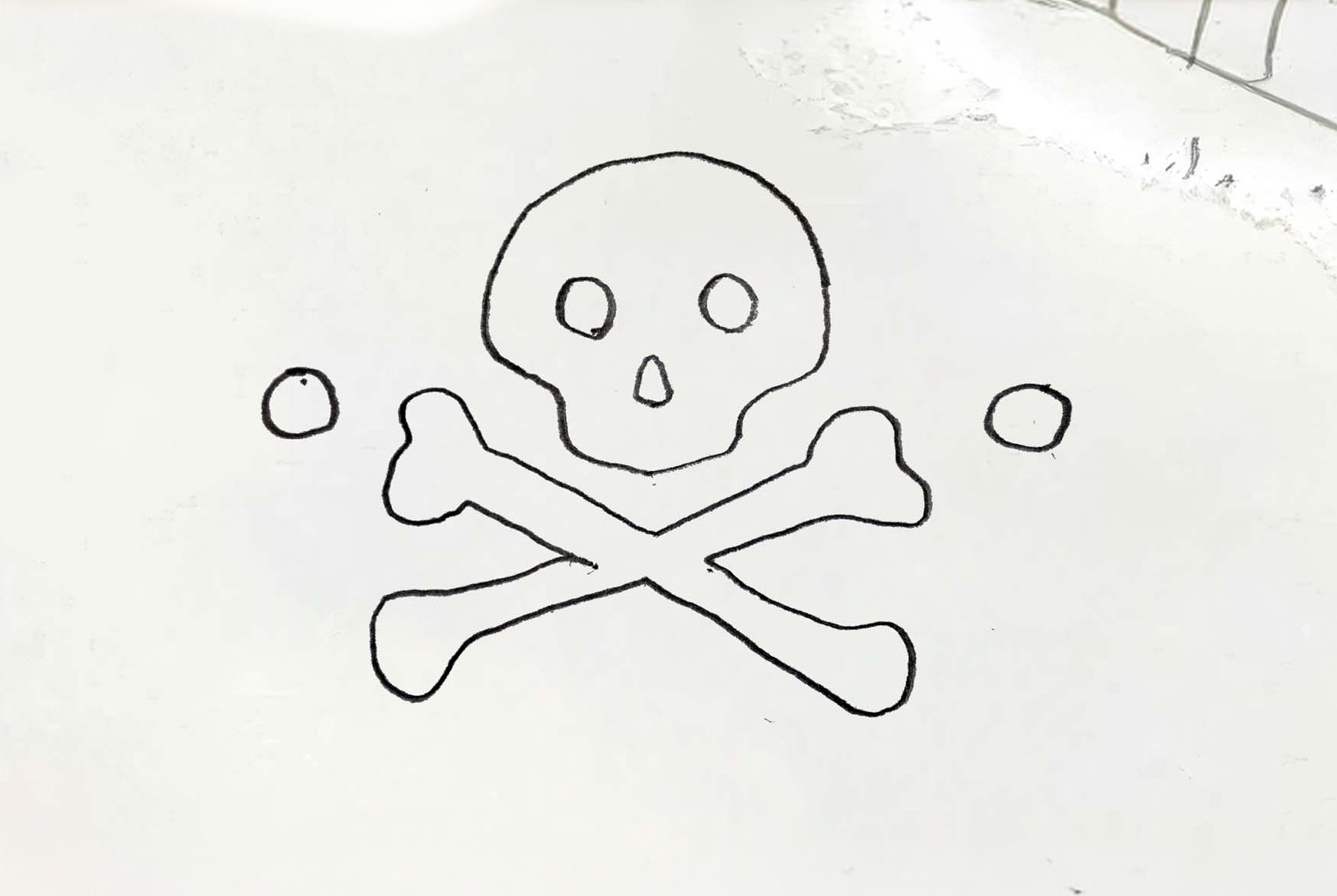
Fifteen seconds, one pass, no second option. The wobble in the crossbones is original and it stayed.
Jeremy spent 14 months travelling. When he came back he wanted to make things for people who wander: leather flasks, handcrafted goods, apparel built with the kind of quality you only understand after sleeping in enough bad hostels.
He loved that the skull was rough, uneven, a little wild. It is a pirate brand, he said. It is not supposed to be perfect. That became the brief, and every decision after it filtered through the same lens.

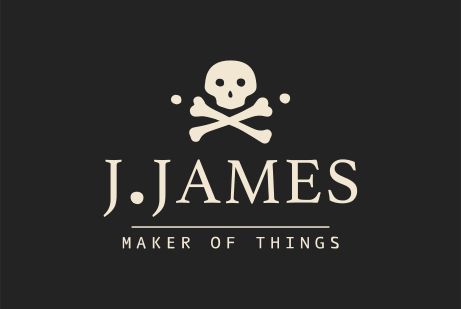
Set with a serif wordmark and a spaced rule. The type carries the discipline so the skull does not have to.
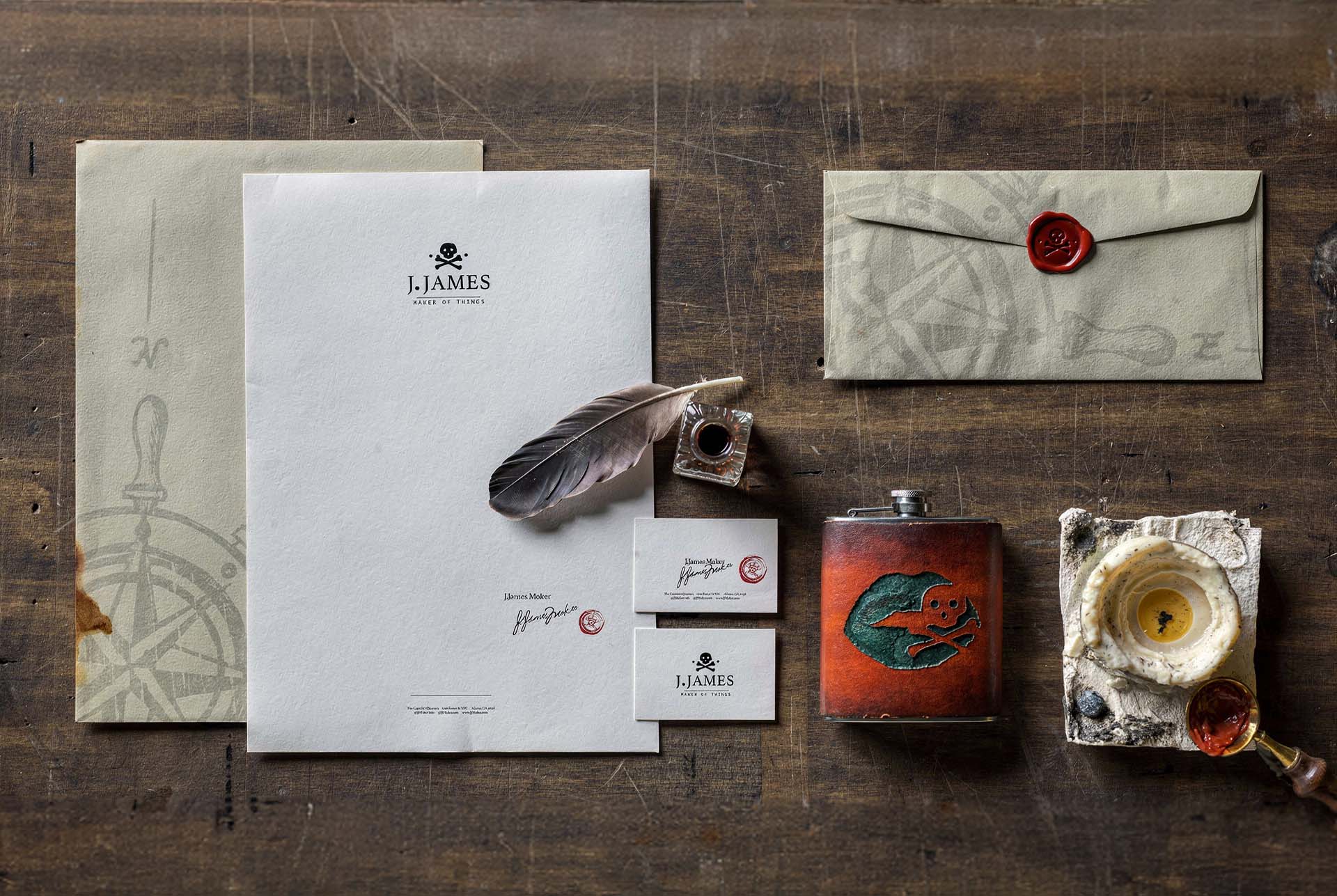
Letterhead, cards, a wax sealed envelope and a flask on the same table. The system is printed on paper that already looks used.
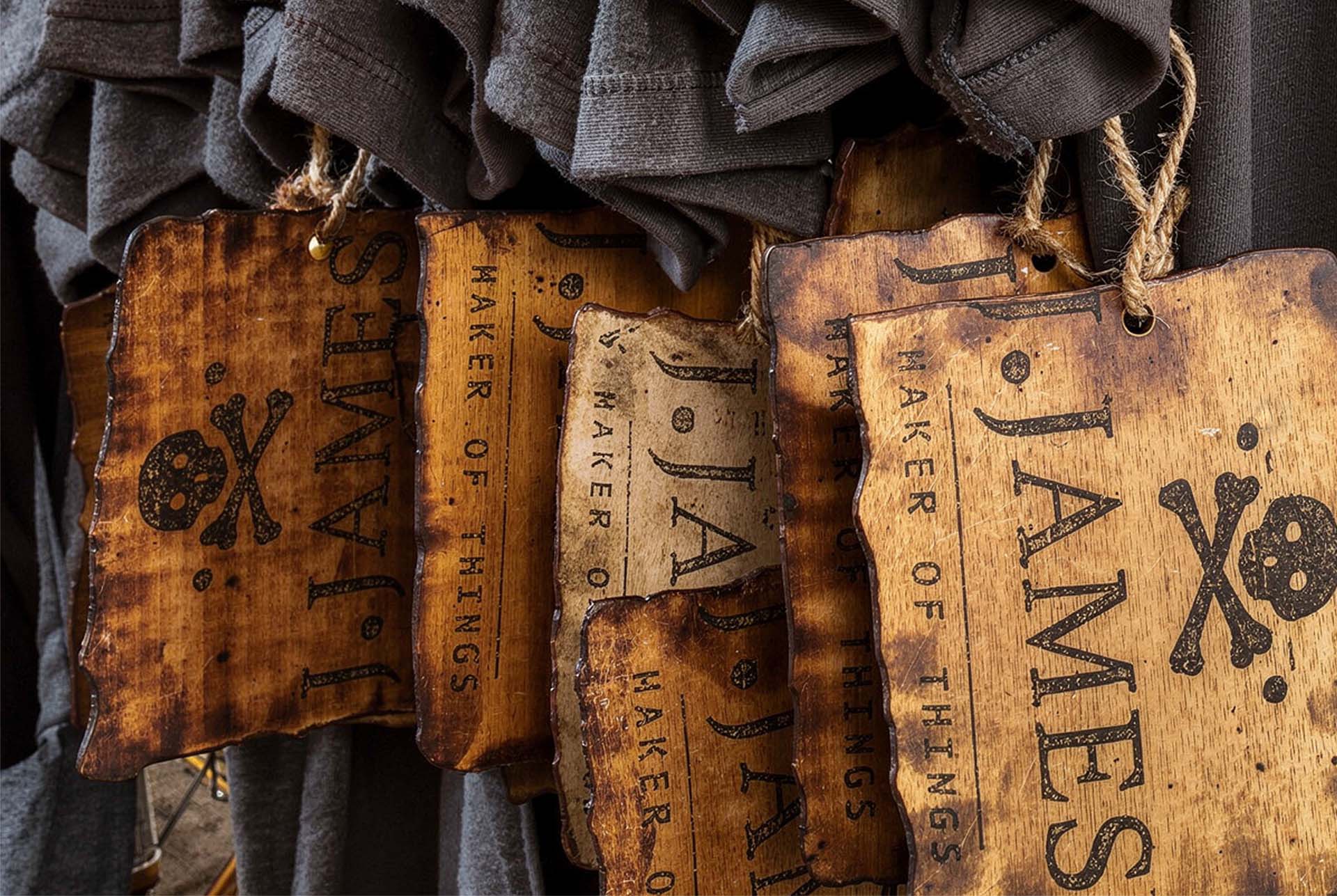
Burnt into wood and tied on with twine. The tag is the first thing a customer touches.
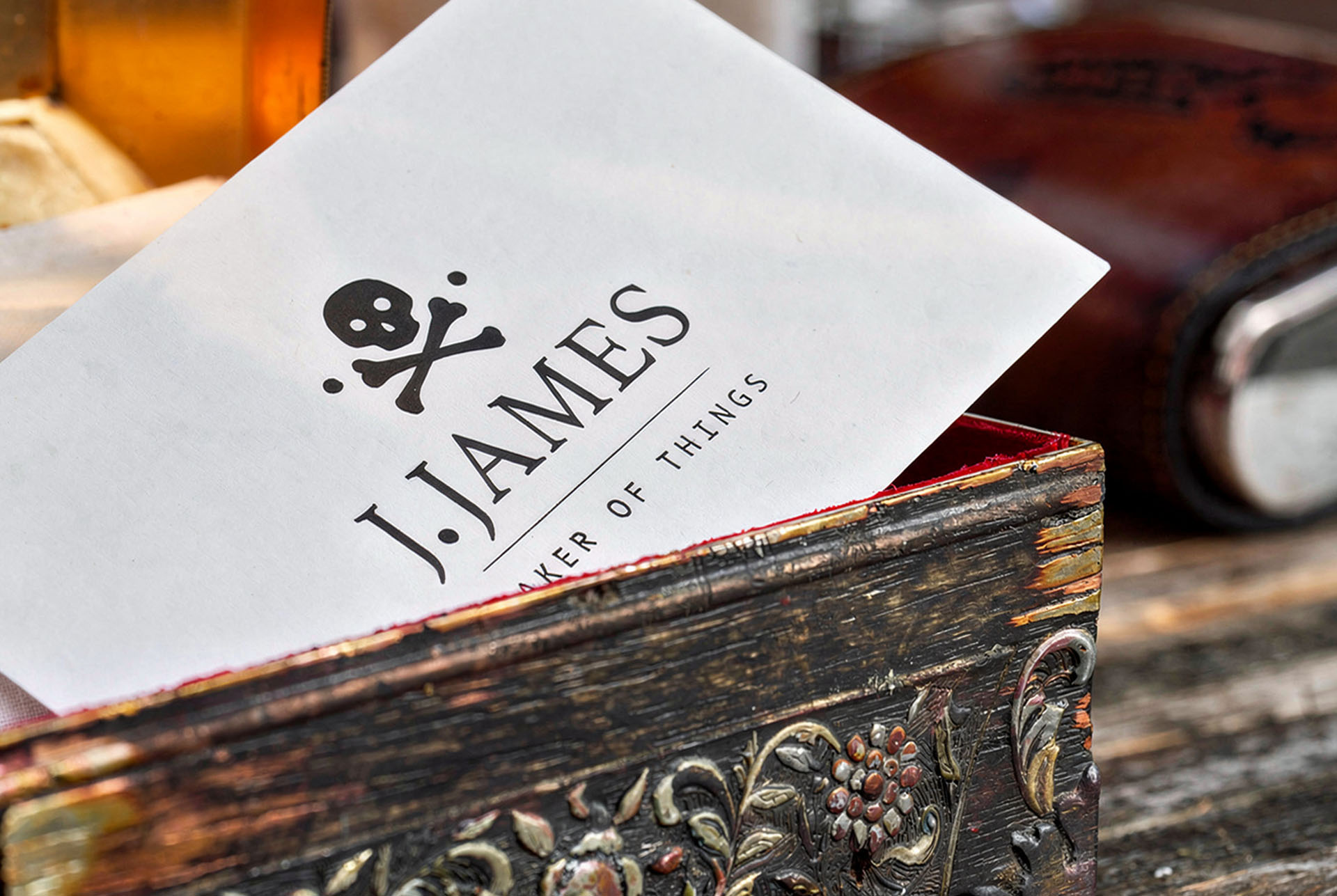
White stock, black mark, no finish. Nothing on this card is trying to look expensive.
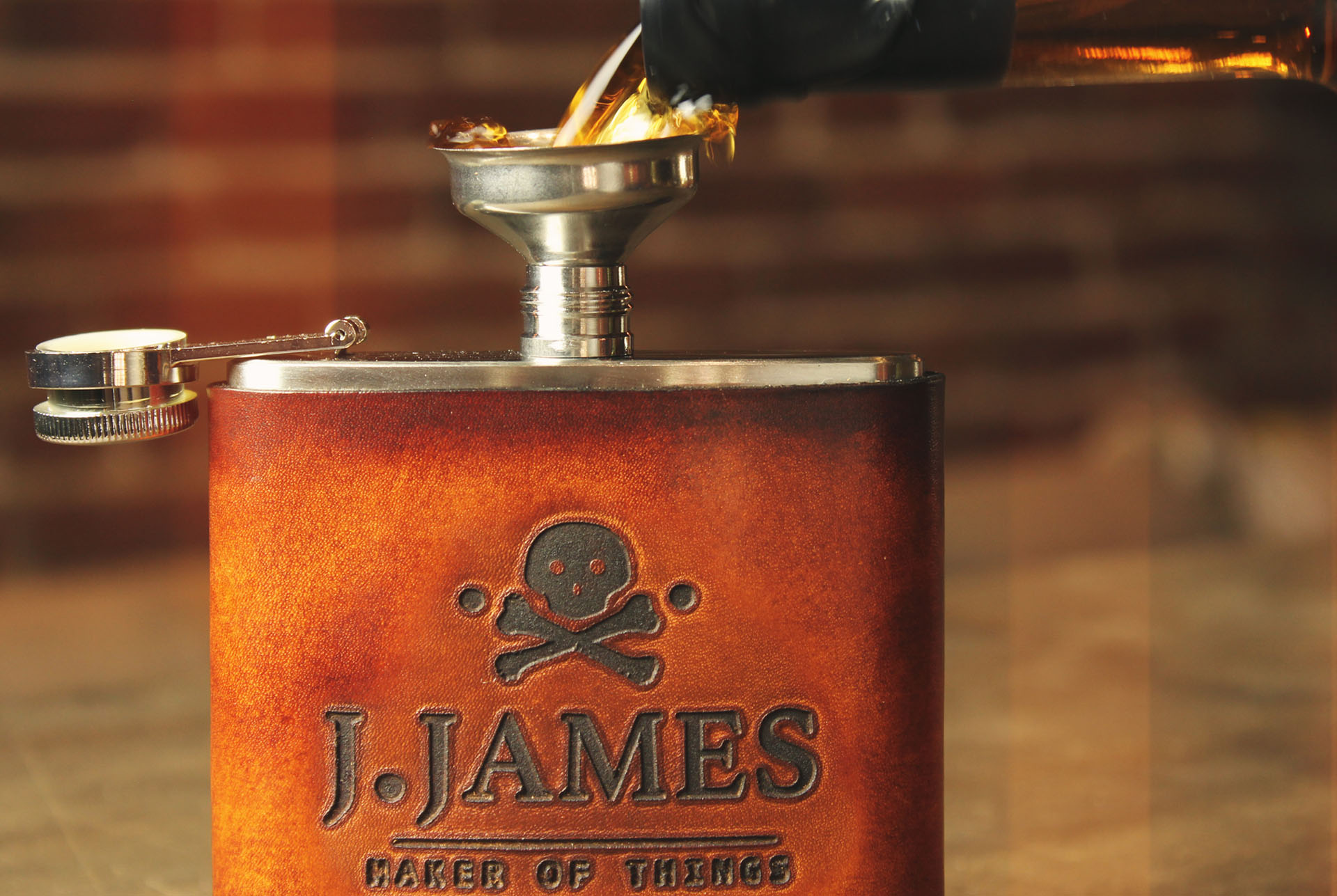
Embossed into leather, filled at the bar. The mark at the size it actually gets handled.
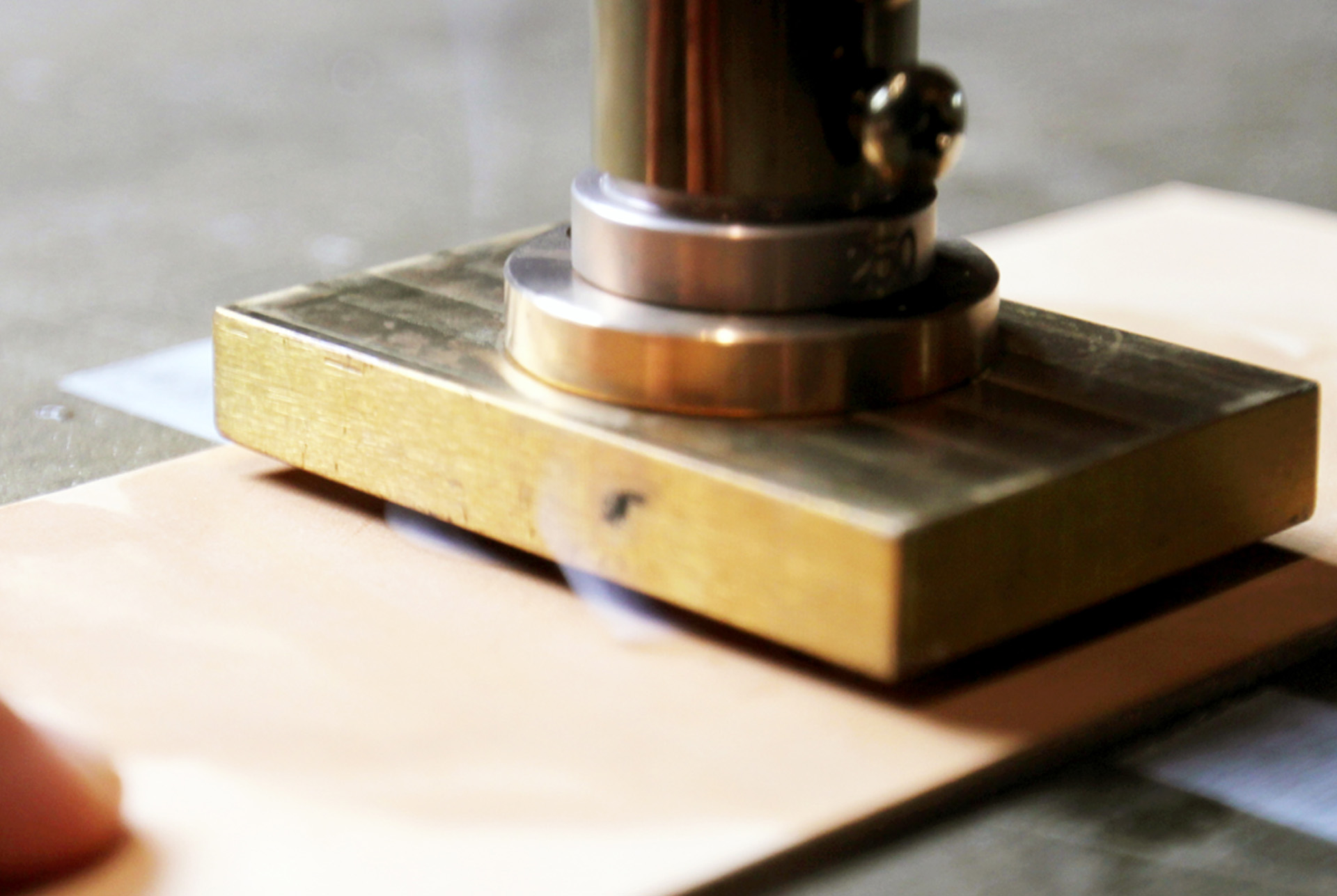
A brass die on the press. No jig, no batch run, just the die and the hide.

A table of wraps drying. Every one comes out a slightly different color and nobody was correcting for that.

Bound by hand around the steel. The stitch line holds the wrap in place for the long haul.
Jeremy James · Founder
He saw the first sketch and told me not to fix it.
After that the ask was to keep it simple, usually one big graphic and nothing around it. The uneven line weight in the skull is load-bearing. Clean it up and it stops looking like a person drew it.
Production · In house

Jeremy built this press from scratch. It is the entire factory.
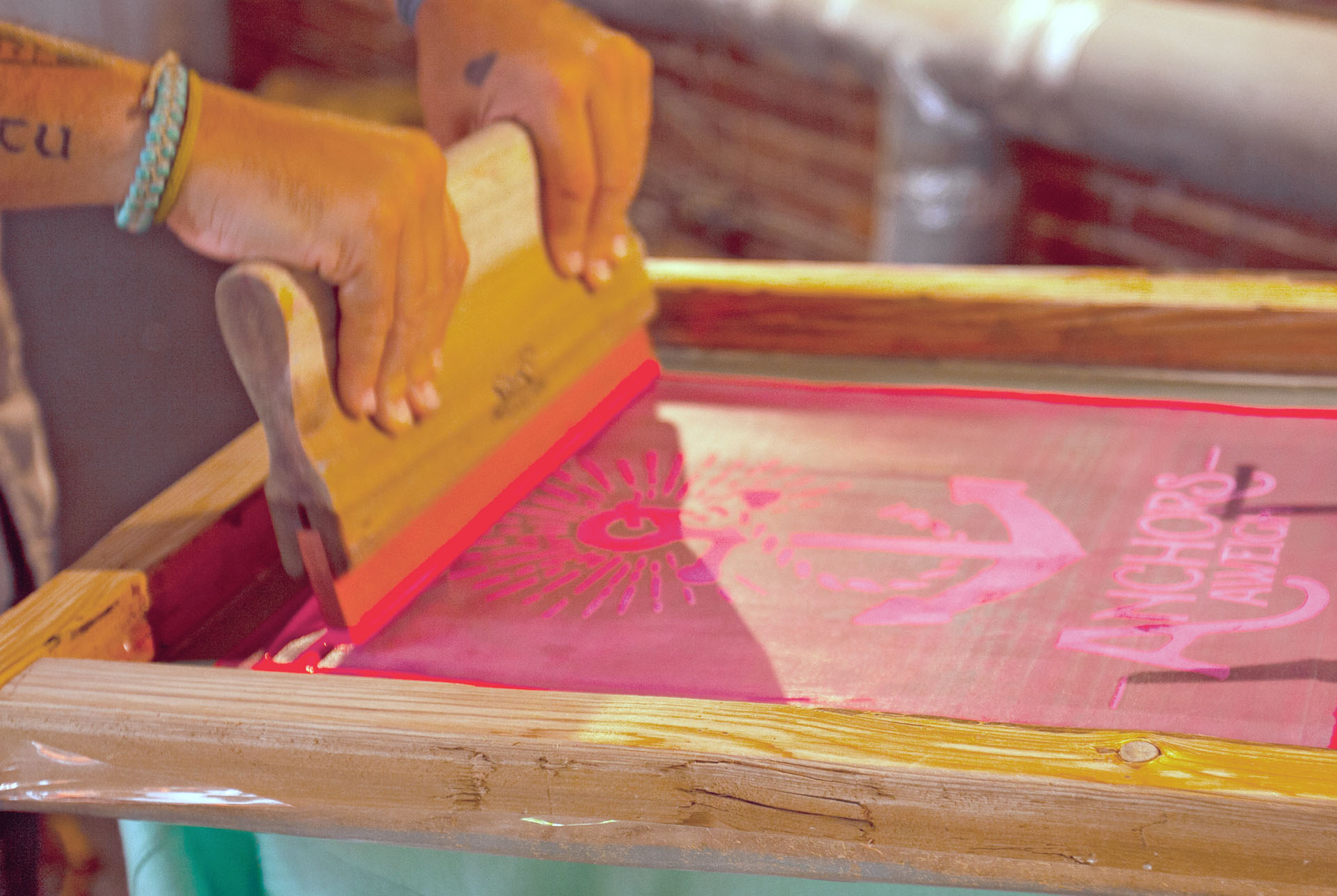
One pull per shirt. Pressure is the difference between a crisp print and a soft one, and it is a hand decision every time.
The Captain

Hoodie, joggers, beanie, tee. One graphic sized four ways for one collection.

The Captain. Same skull, given a hat and a sunburst, lettered in a rougher hand.
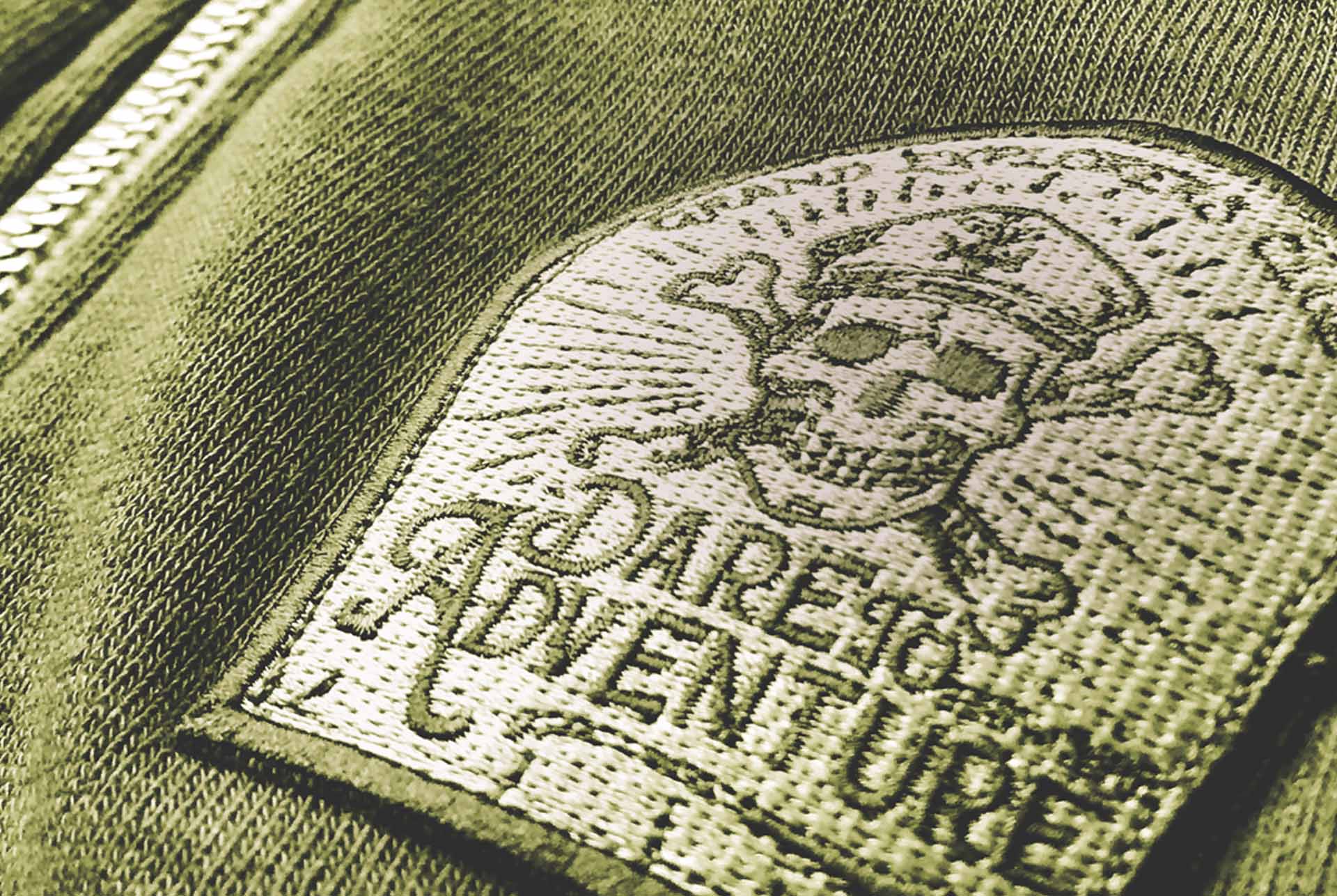
Embroidered on olive fleece. Thread softens the mark without cleaning it up.
The Wanderer

Not all who wander are lost, set as a circular badge with swallows and stars.
Two collections, one world. The Wanderer reads worn, sun bleached and horizon chasing. The Captain reads darker and more deliberate. Same skull, different ship.
The embossing on the flask is the same mark as the hang tag is the same mark as the screen printed chest. That is identity discipline across wildly different surfaces and production methods.
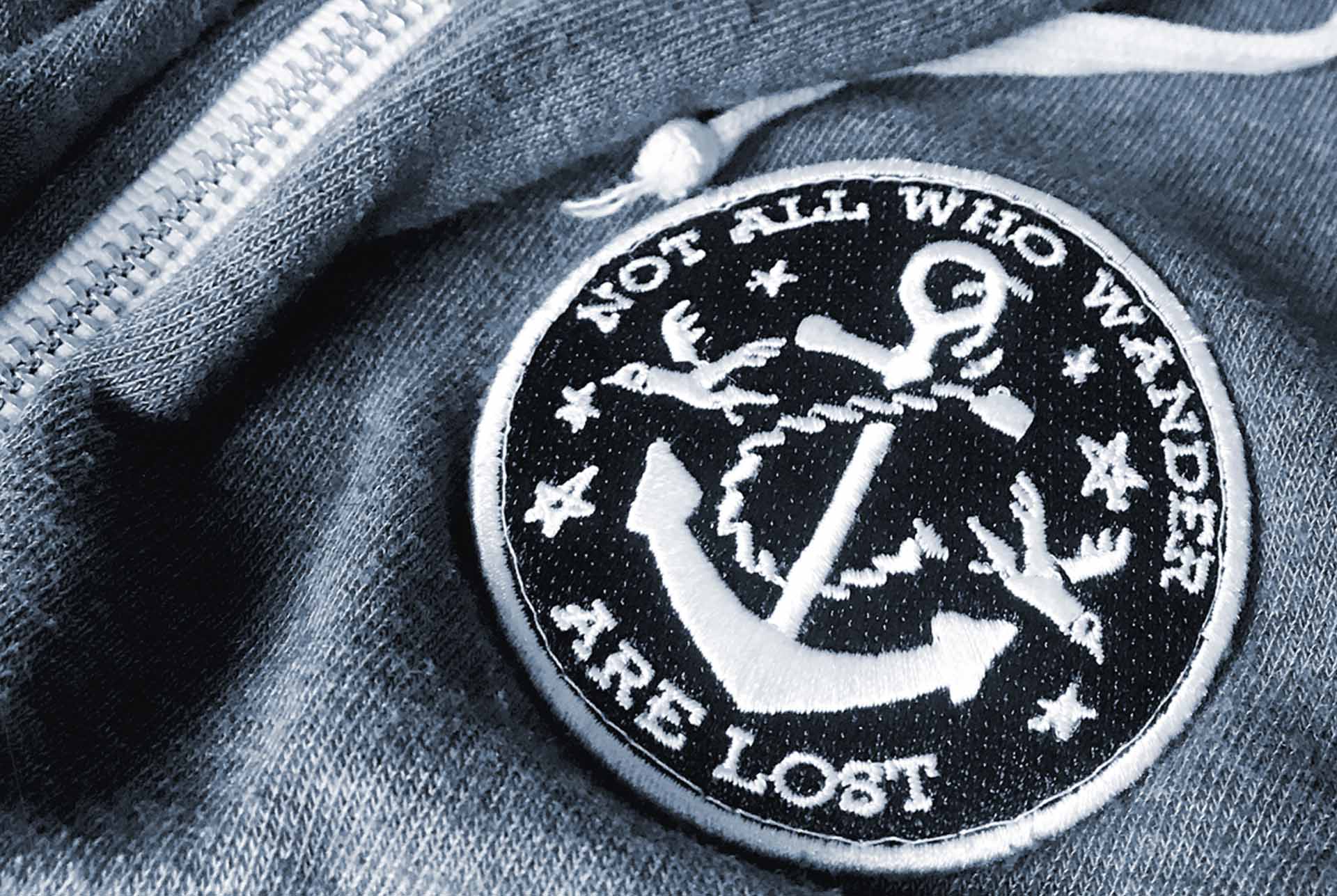
The same badge in thread. The distress in the print becomes texture in the stitch.
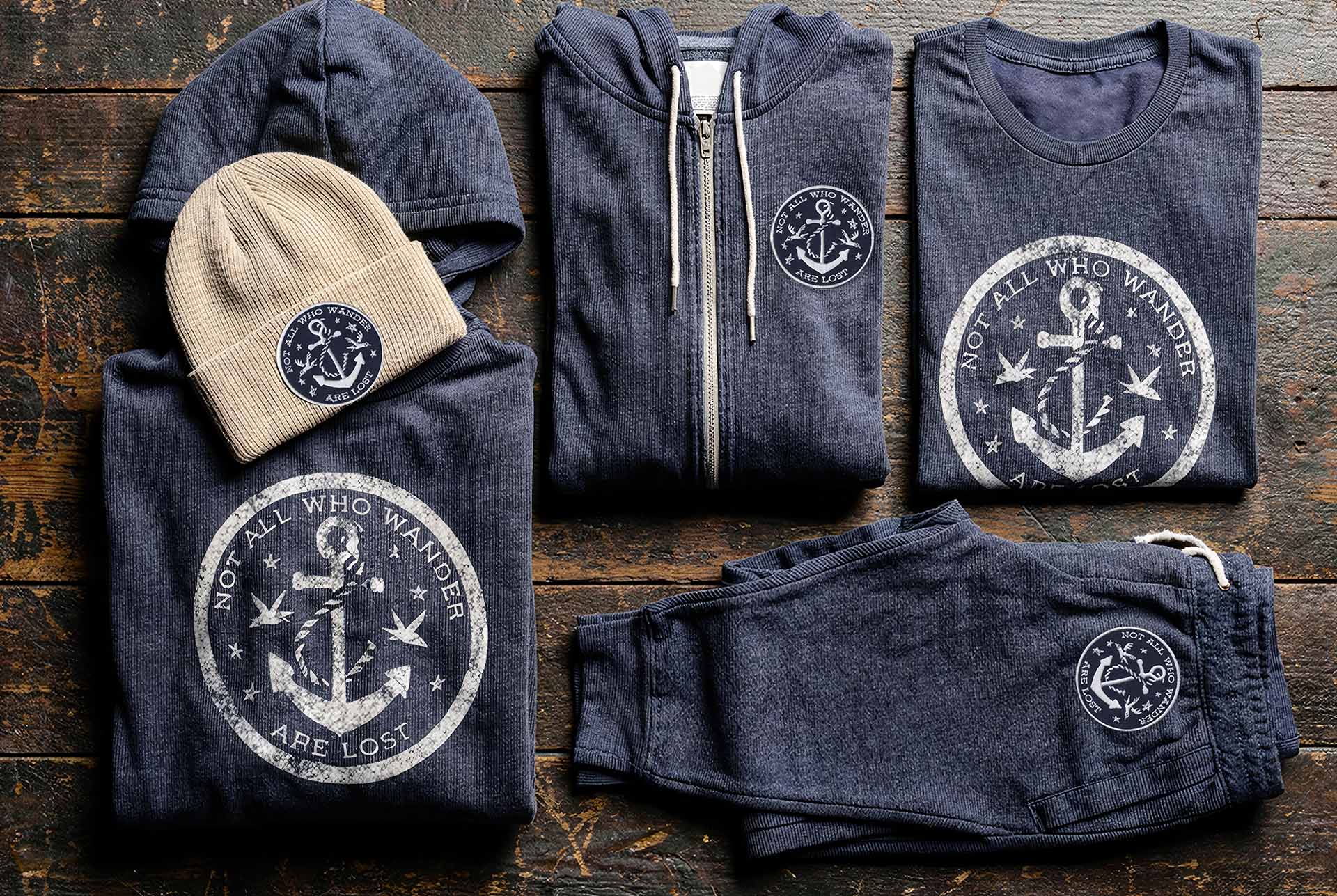
The Wanderer in navy and stone. Cooler and quieter than the Captain, on purpose.

The hard part was never making it better. It was knowing when to stop.
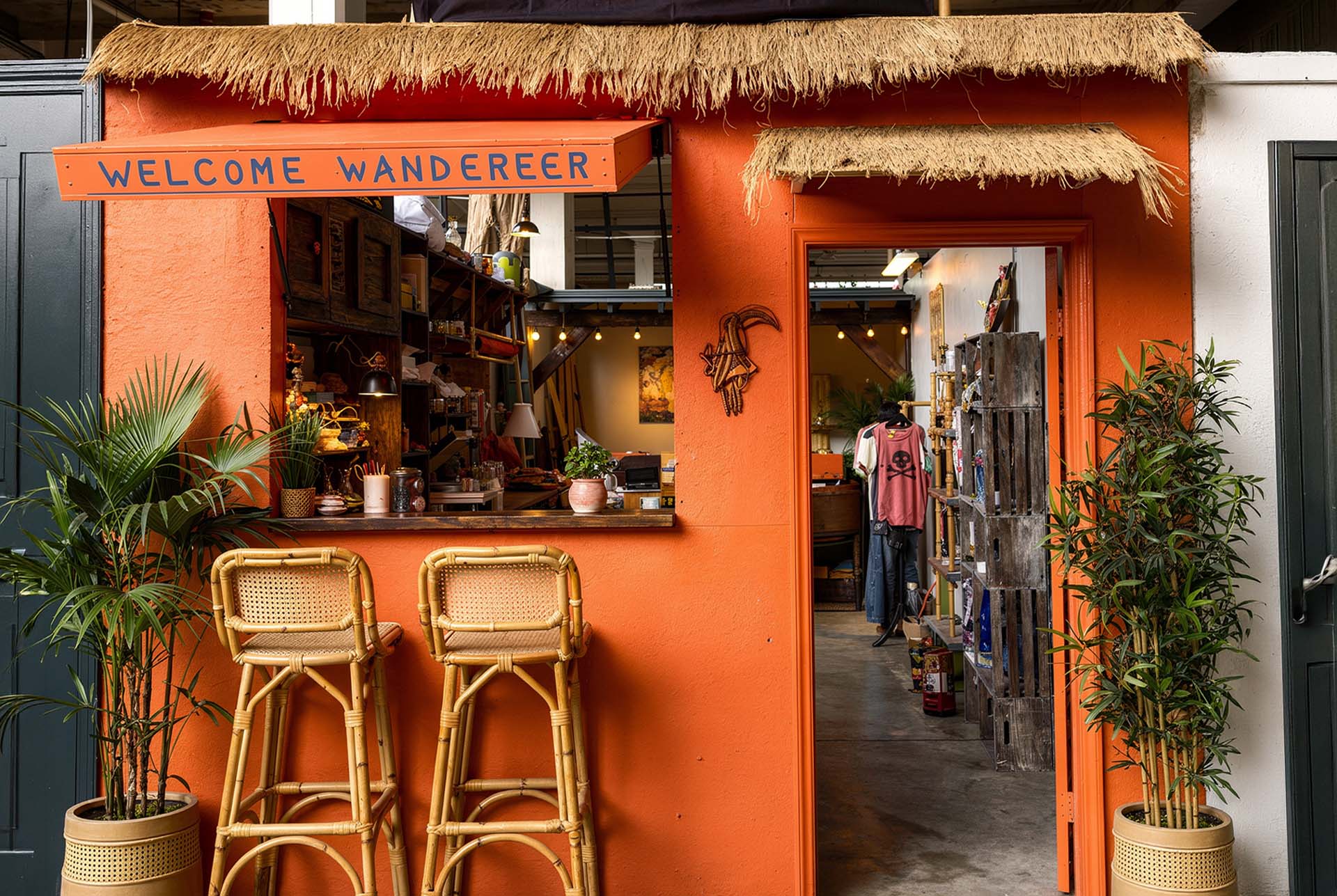
Welcome Wanderer over the door. The second store leaned tropical and the brand went with it.

The first storefront, at the Goat Farm. We built the pipe rails and the swing into the room.
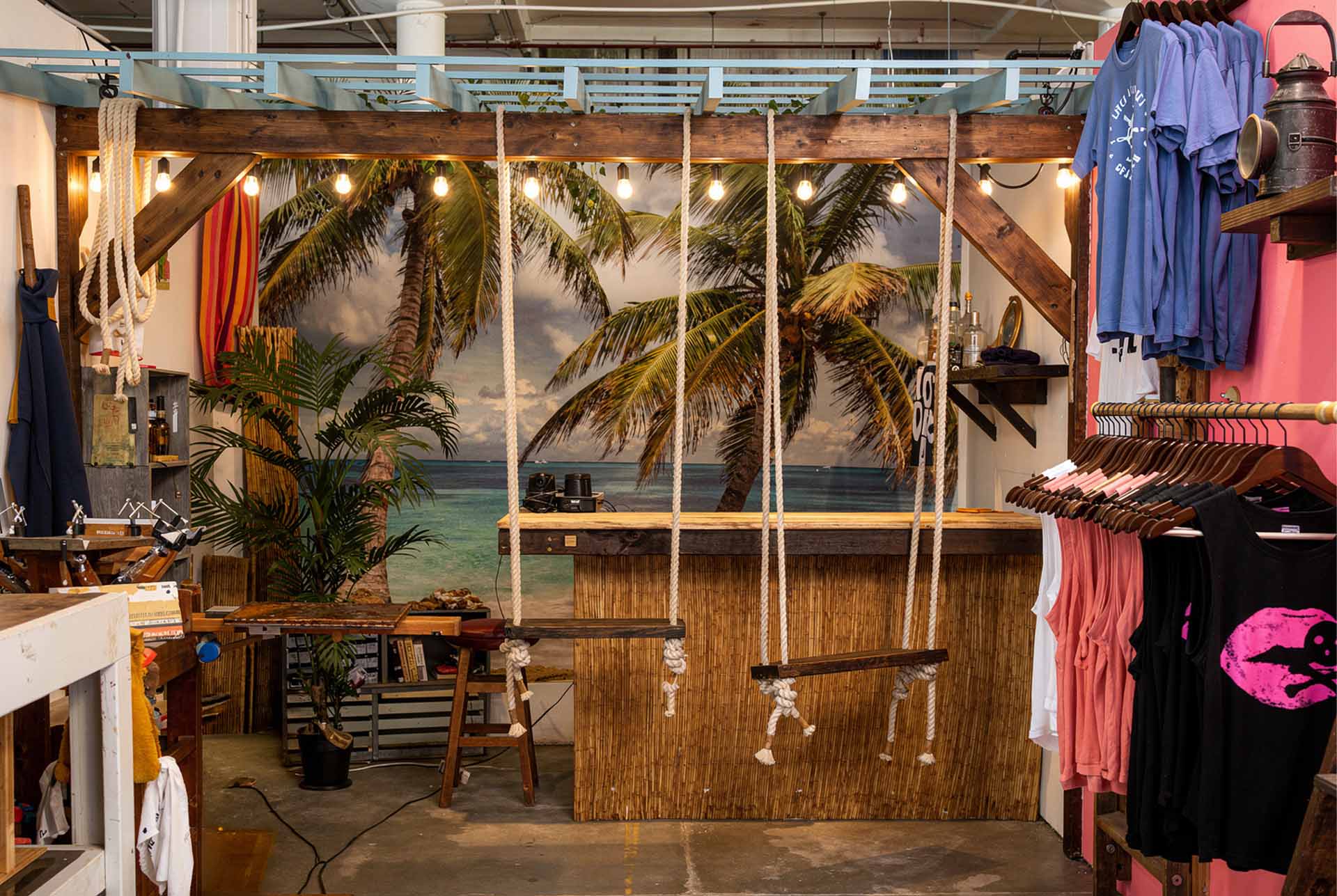
Palm mural, thatch and rope swings. Retail built as somewhere to stand rather than a rack to shop.

The bench behind the counter. Sewing machine, heat press and a wall of tools, all of it left in view.


Shot on a phone in Nicaragua. No lighting kit, no stylist, no set.

A world map tee and a coconut. Product handed to whoever was standing there.

Under the palms. The brand always claimed it lived here, so we took it here.

Shirts hung on a palm while the owners swam. The best product shot of the trip cost nothing.
Jeremy and I backpacked through Nicaragua and took product with us, handing it to locals and travelers for an impromptu shoot. Fifteen percent of sales supported Helping Hands Nicaragua, an organization we visited firsthand.
Every project on this site started with an email.