Seventeen days to take a working prototype to a printed retail product, with the Kickstarter shoot already booked for day seventeen.
Role
Creative direction · Brand identity · Packaging · Product design
Client
Sommify · Co-owner, not a client brief
Industry
Games · Lifestyle · Food and beverage
Deliverables
Logo · Board · Packaging · Cards · Wine keys · Instruction booklet · Campaign art
Result
Funded in 13 hours. $21,766 from 328 backers. About 3,000 units in year one.
A full design system in 17 days. Funded in 13 hours.
Challenge
A finished logo and nothing else branded out. The board, the packaging, the cards and the instructions all had to exist, with a Kickstarter shoot booked for day seventeen.
Approach
Worked out the pattern and the icon vocabulary while designing the board, so the rest of the system already had components waiting. One board went to review, then straight to packaging so the print could start.
Outcome
$21,766 against a $10,000 goal from 328 backers. About 3,000 units in year one, national press, and a spot on the shelf for the holiday season.
As seen on
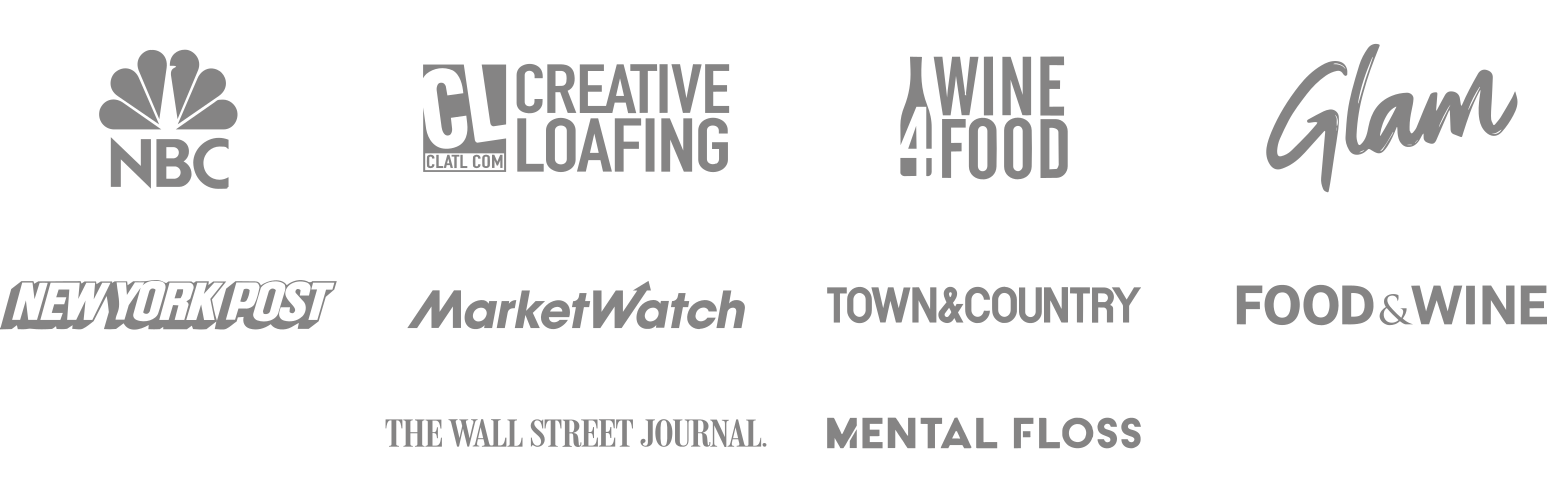
NBC, The Wall Street Journal, Food and Wine, Town and Country, New York Post, MarketWatch, Creative Loafing, Mental Floss, Glam, Wine4Food.
Conner and Jessica were not handing me a finished product. They were selling me an idea, tested on whoever would sit down with them on the BeltLine. I went away and designed a logo for a mystery wine game, and that got me invited back to look at the game itself.
I came in as a co-owner, not a designer executing a brief. I had spent years in the gift industry, so I knew the real deadline was not the Kickstarter. It was the holiday gift season. Miss that window and you wait a year.
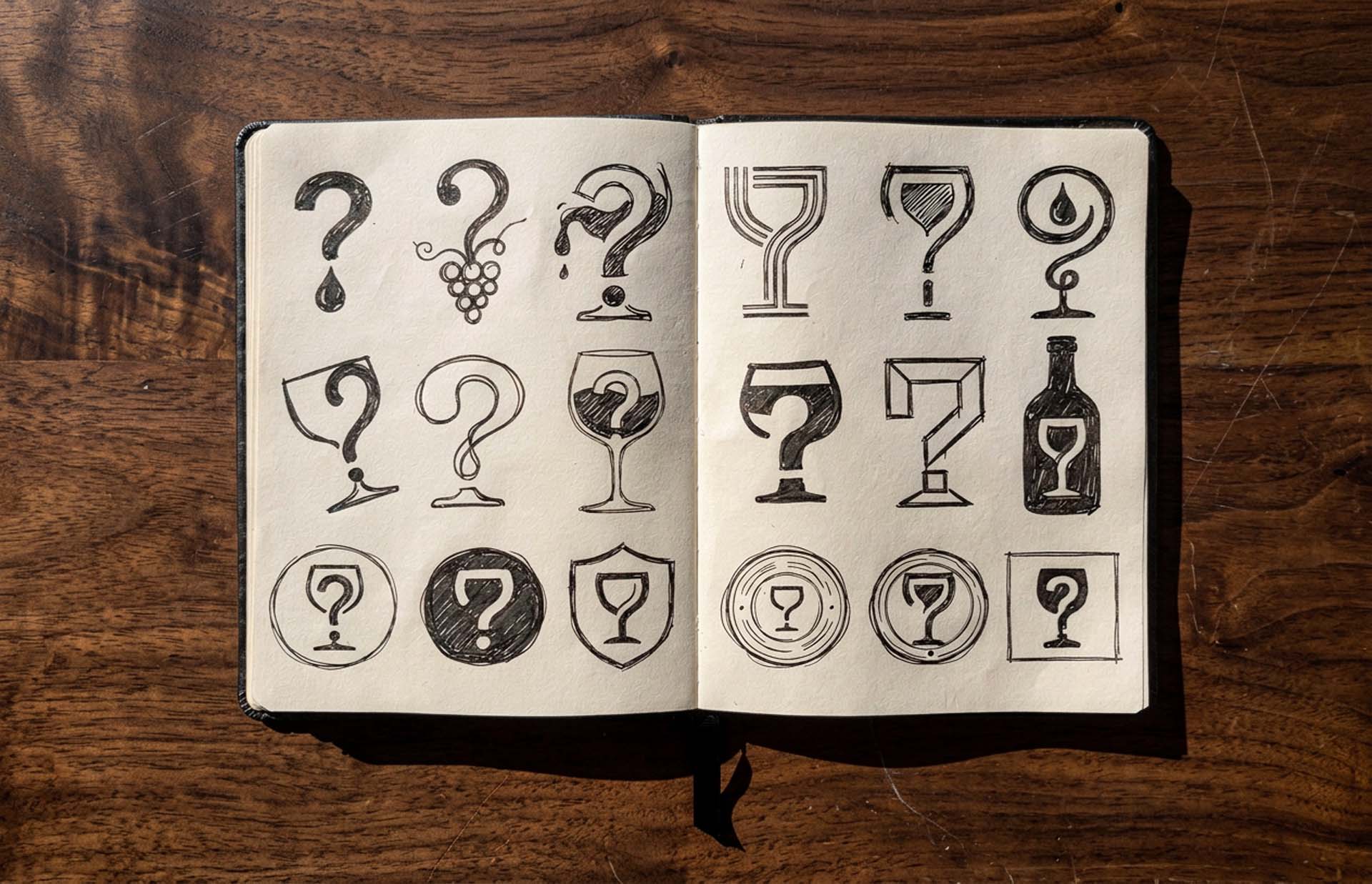
Eighteen ways to put a question mark and a wine glass in the same shape.
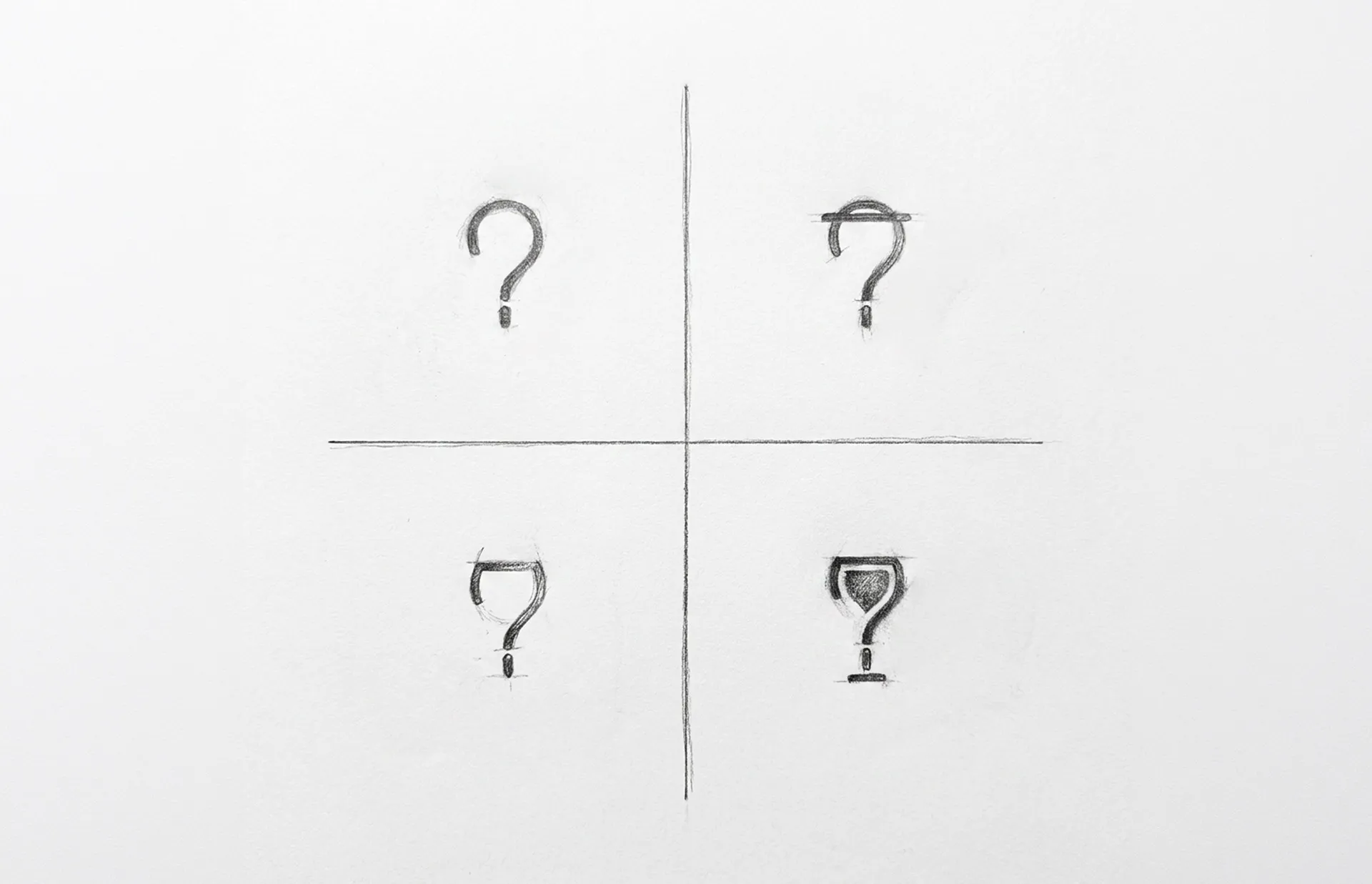
Four passes in pencil. The bowl closes around the hook until the glass is doing the asking.
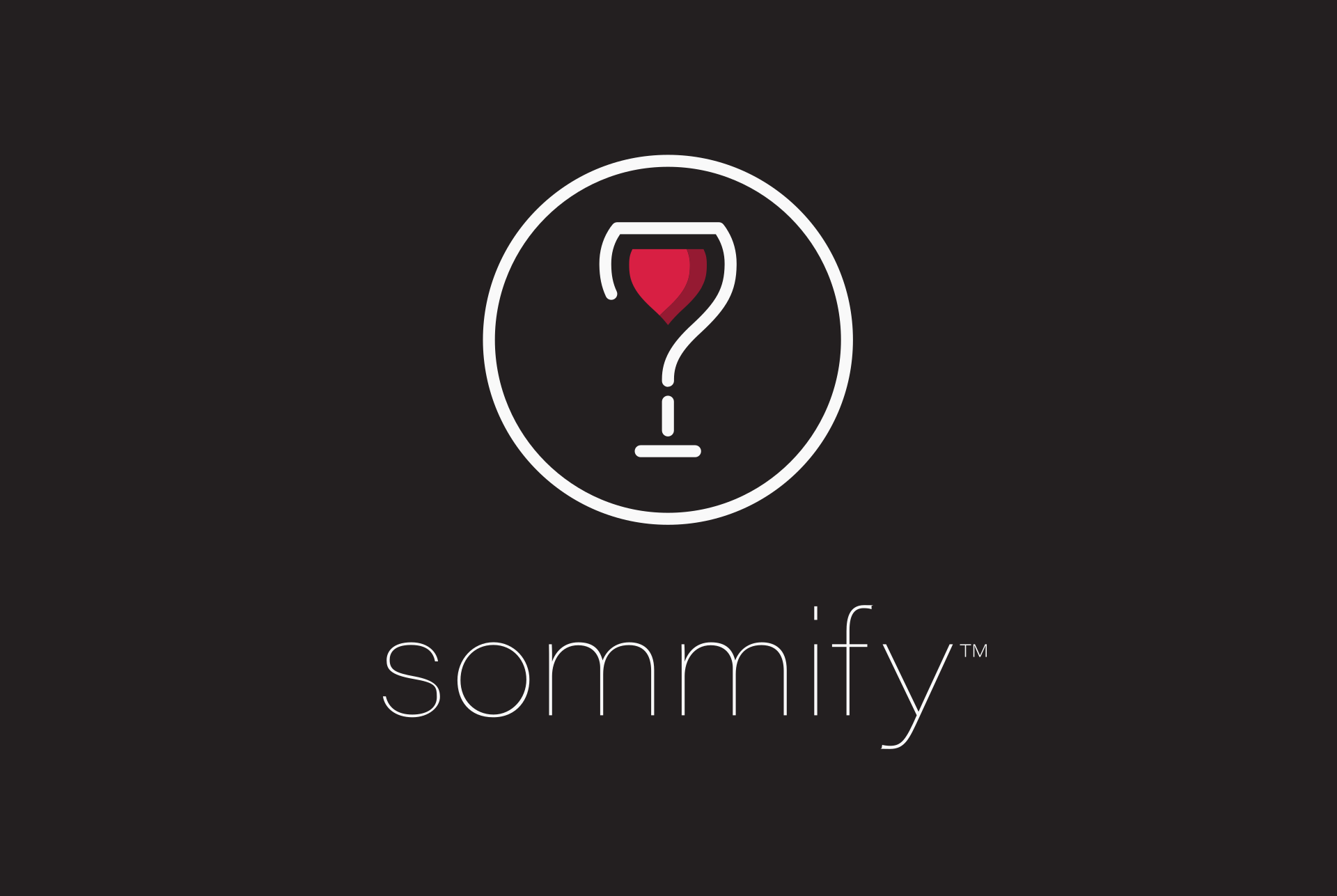
The finished mark. It had to survive being a Kickstarter thumbnail and a box front on the same day, so the whole idea sits inside one circle.

Shadow Grey, Burgundy, Classic Crimson, Snow White. Pour the bottle across all of them and the palette explains itself.
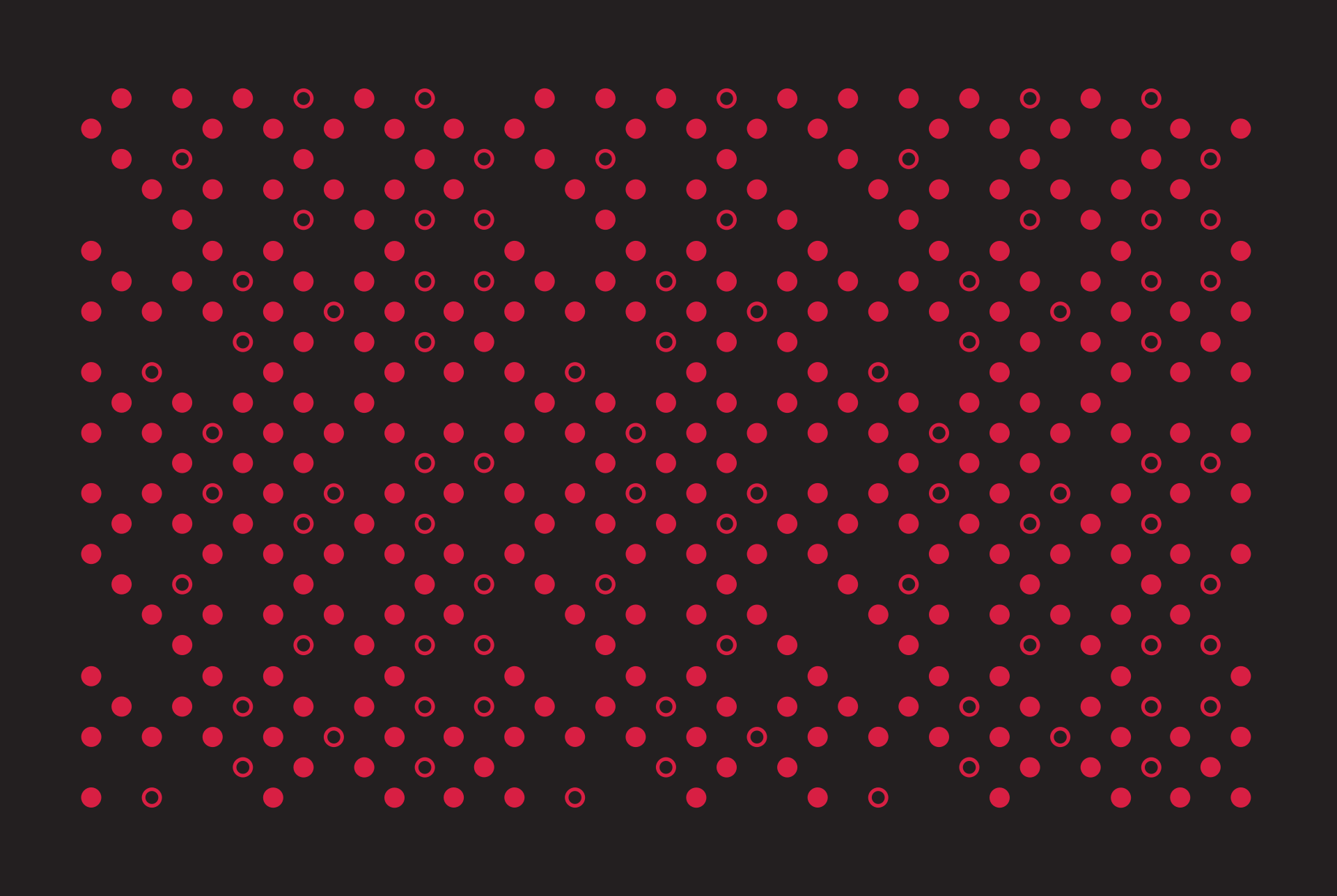
Dots and rings, filled and open. Built during the board work so the rest of the system already had a texture waiting for it.
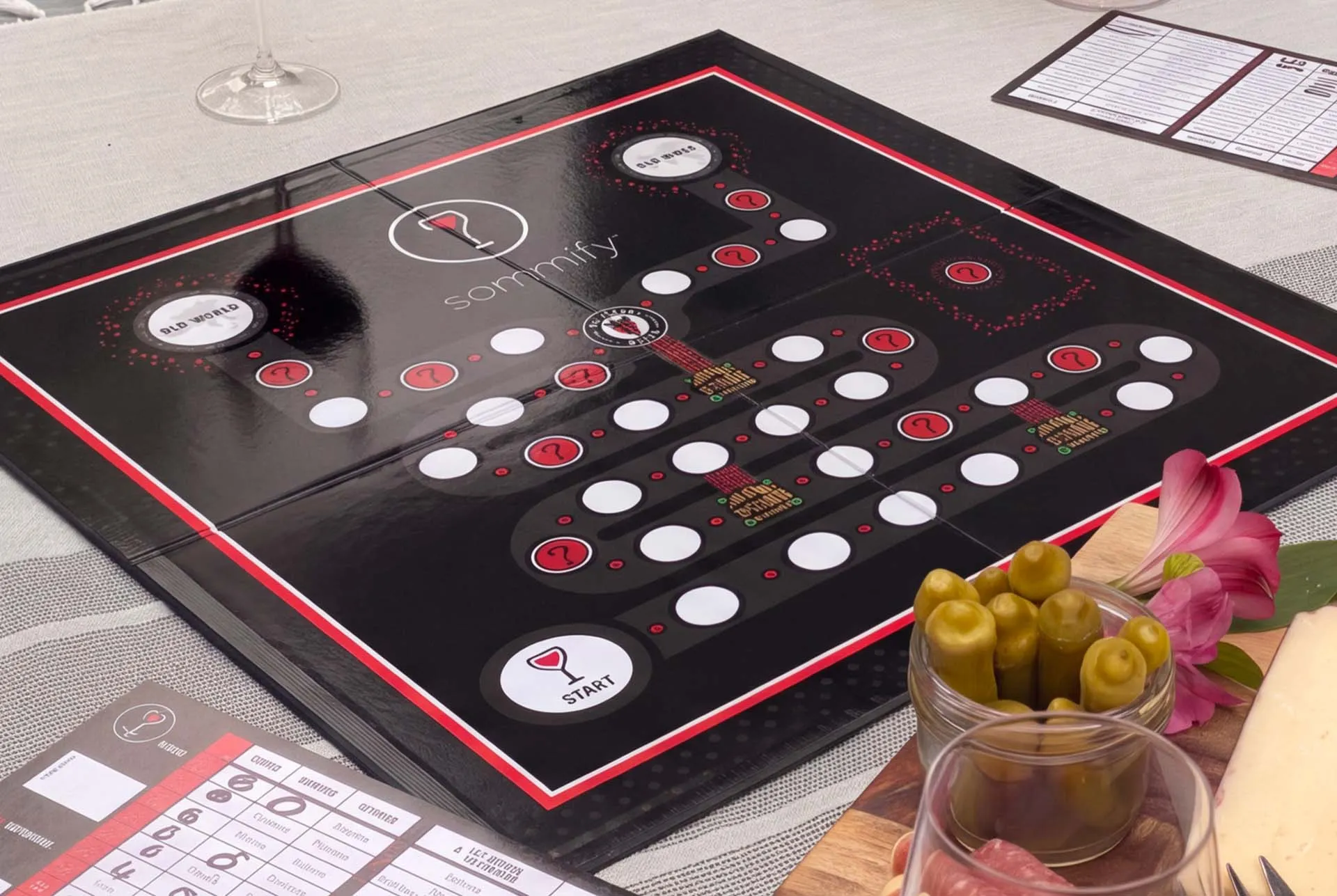
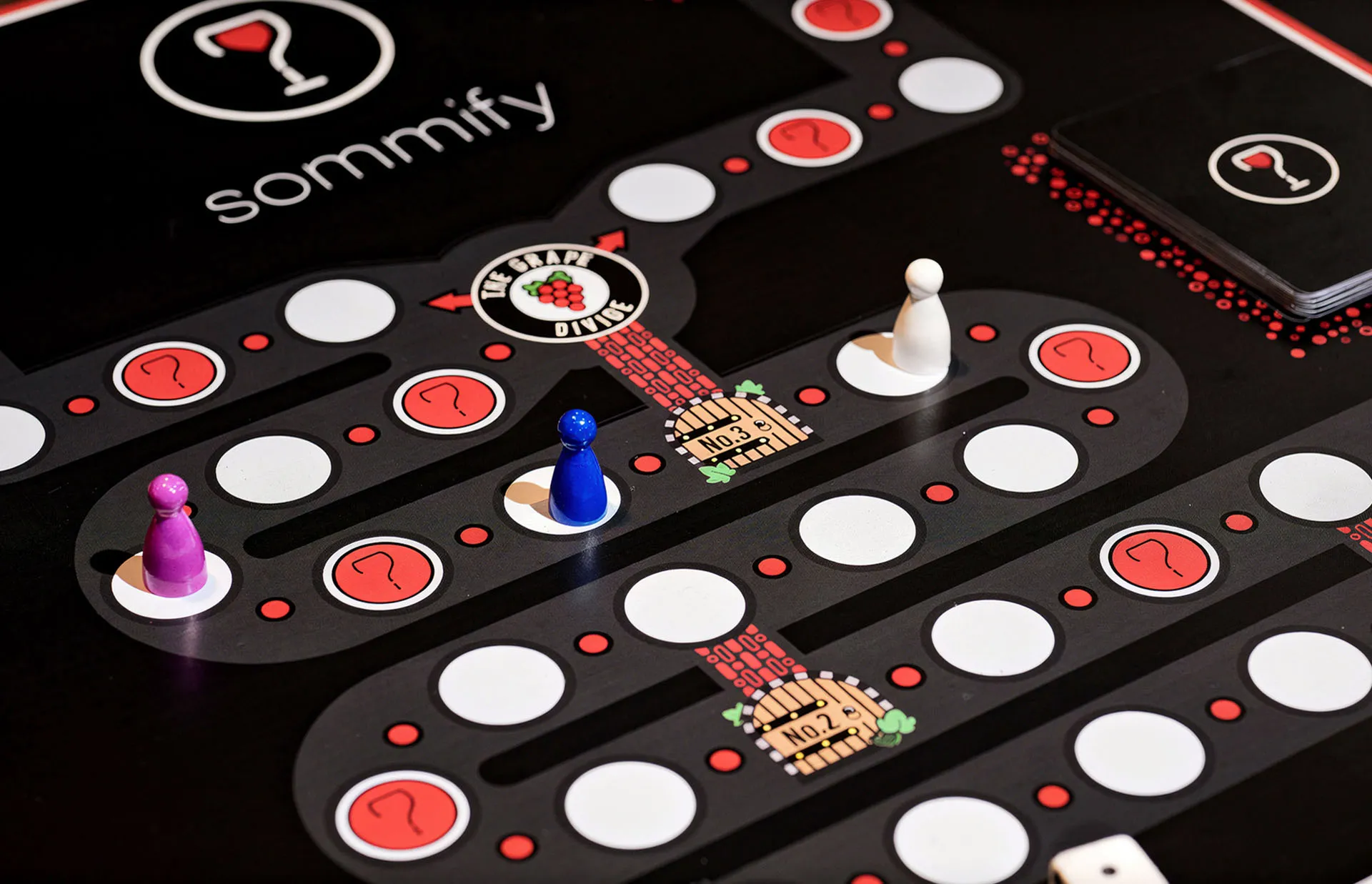
The board printed. Black field, cream spaces, one red line running the length of it, and dice that still read at a glance.
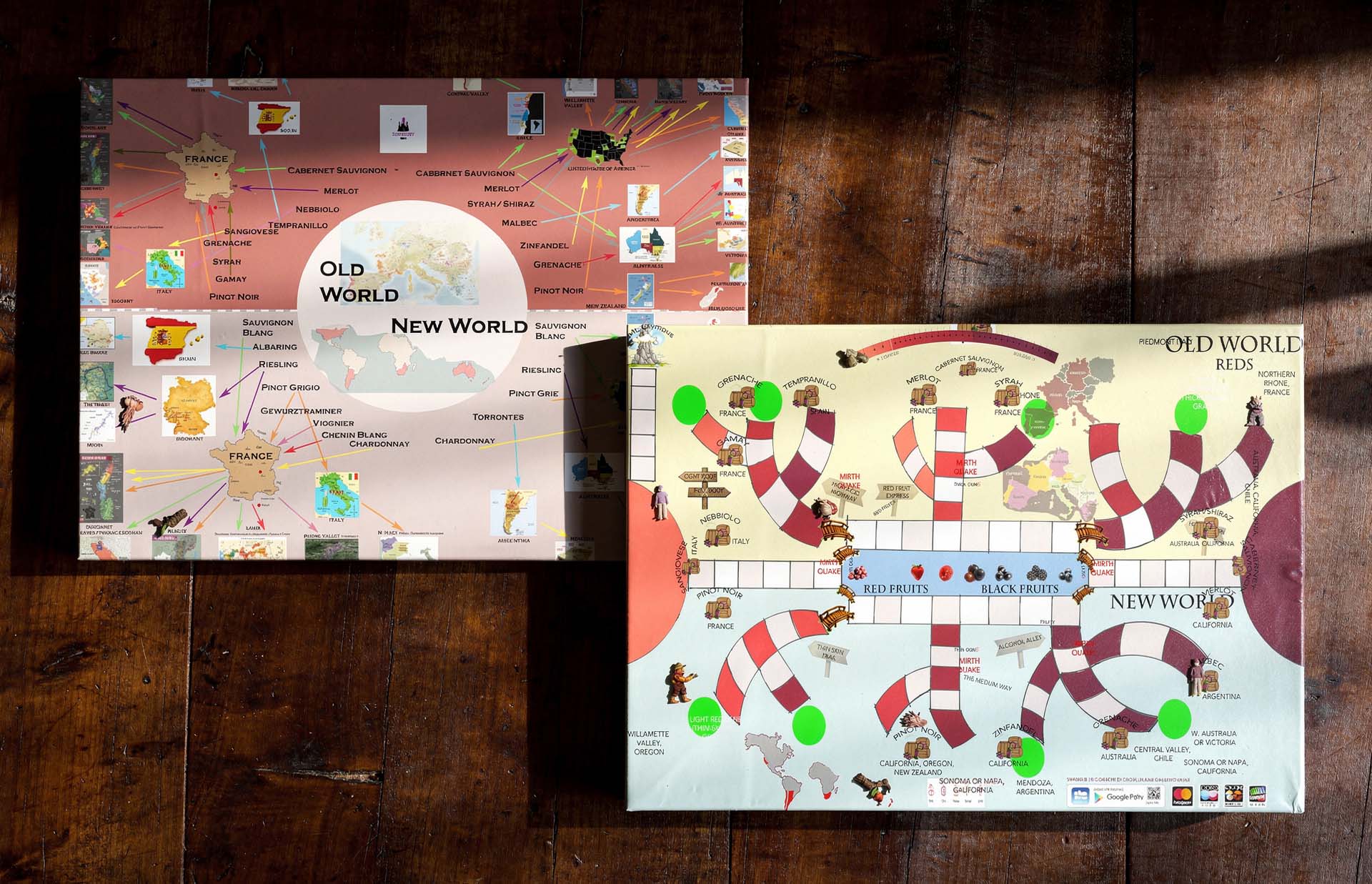
Conner and Jessica's prototype boards, built before I came on. Every grape was already mapped to a country, so the research was done and the design was not.
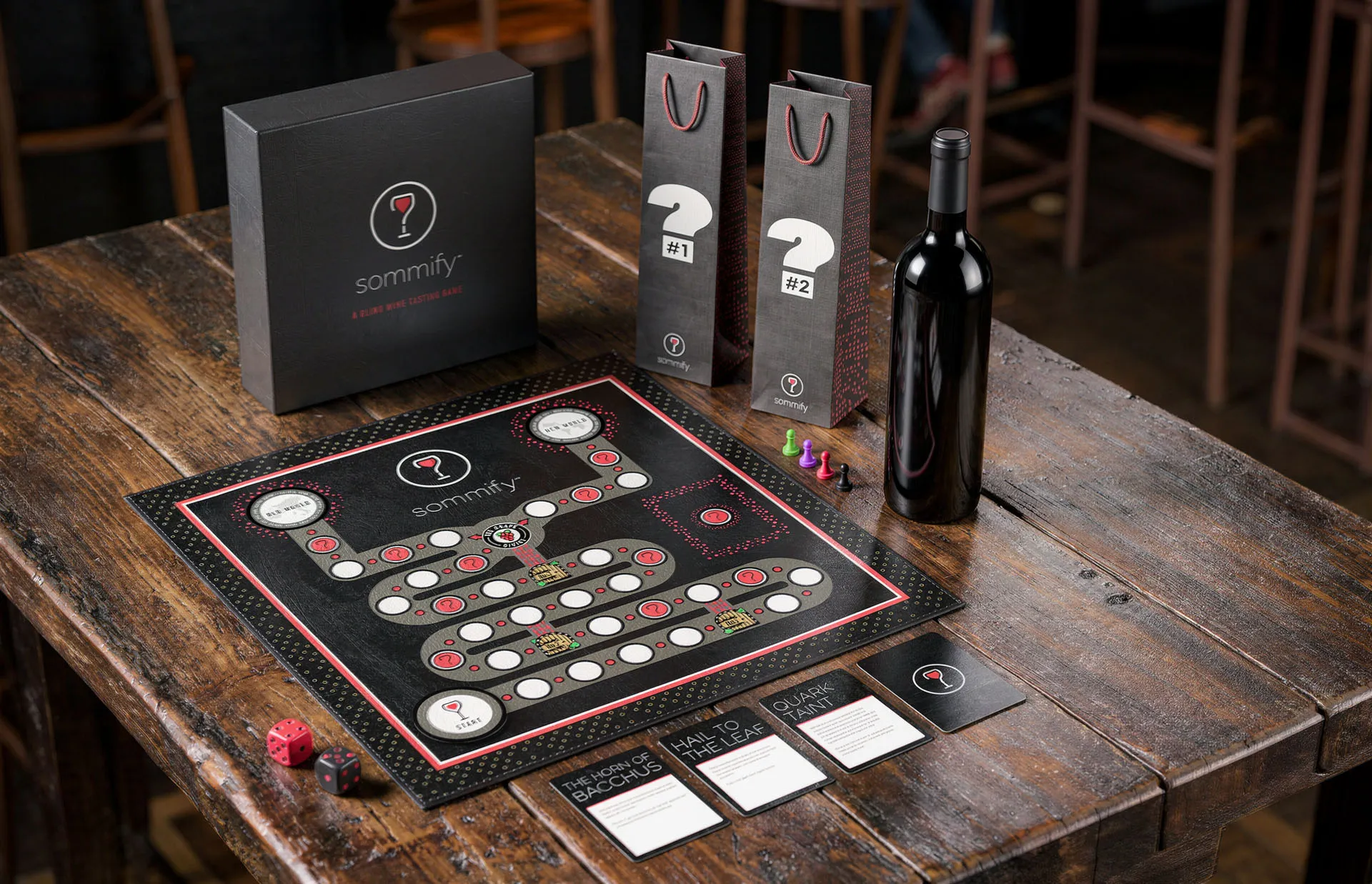
Printed and in play. The pawns had to read against black at a glance, which is why the spaces are cream and not grey.
Conner Taylor · Co-founder, Sommify
Andrew stepped in, asked the right questions, immediately took ownership, and delivered under a strict deadline.
He listens, understands what is needed, and follows through with confidence and clarity. Blew my expectations out of the water.
The box · On the bar
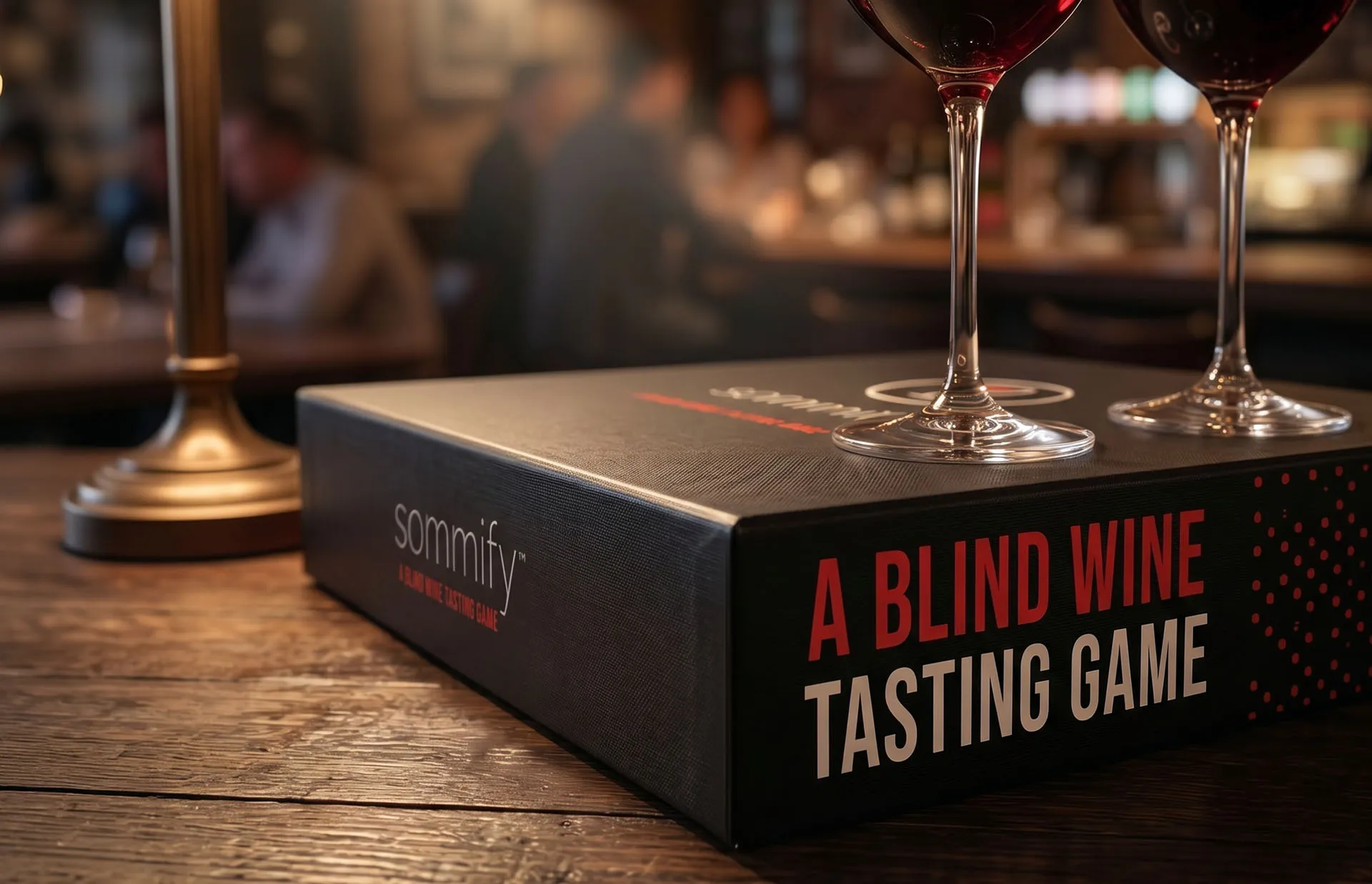
A blind wine tasting game, said on the edge of the box. Sitting on a bar it gets about two seconds to explain itself.
The pieces · In hand
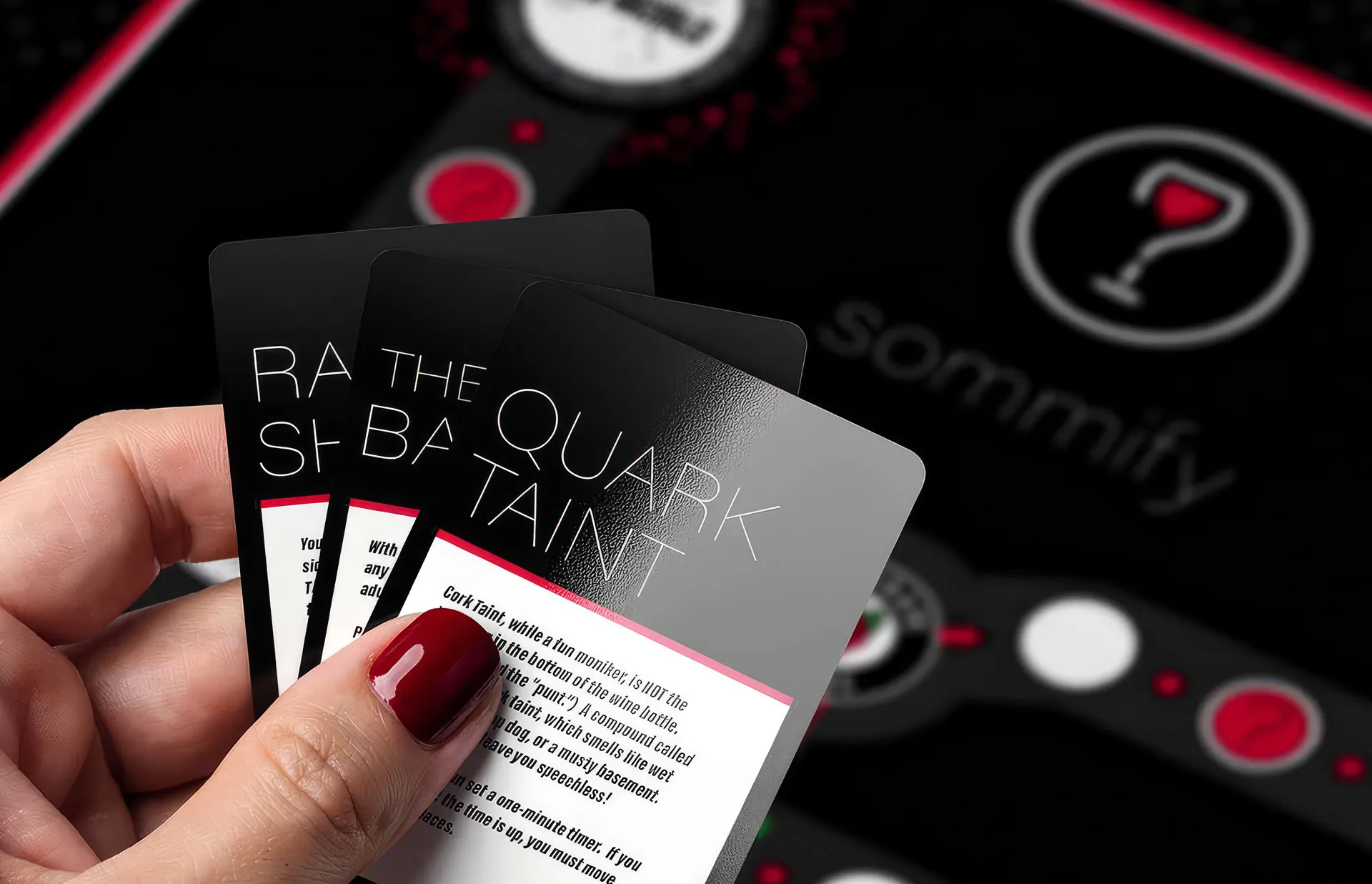
The Quark Taint, in hand. This deck did not exist until a word came up in conversation and I asked what it meant.
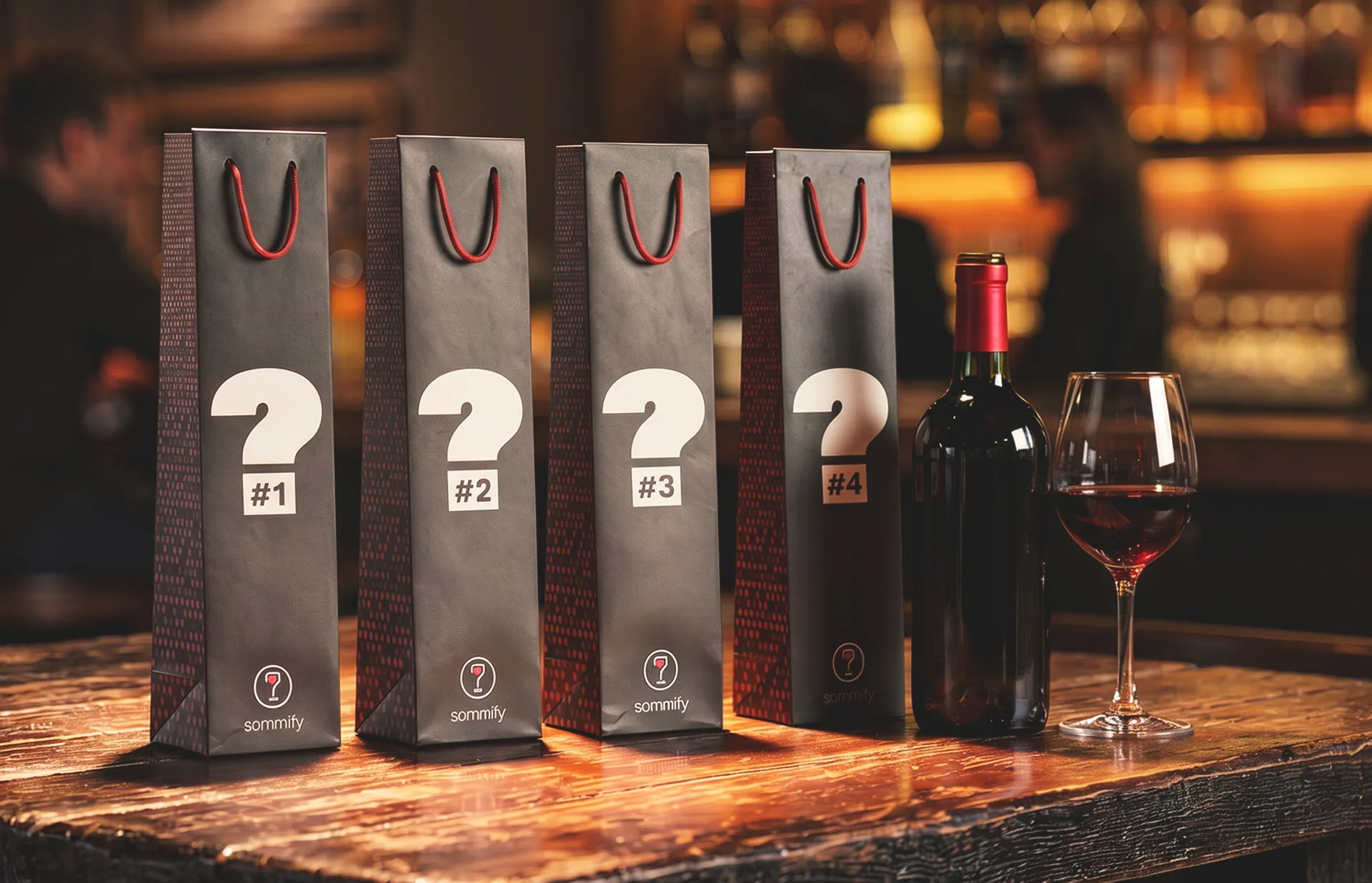
Numbered blind tasting bags. The question mark does the work, so nobody has to explain the rule out loud.
The box · Retail
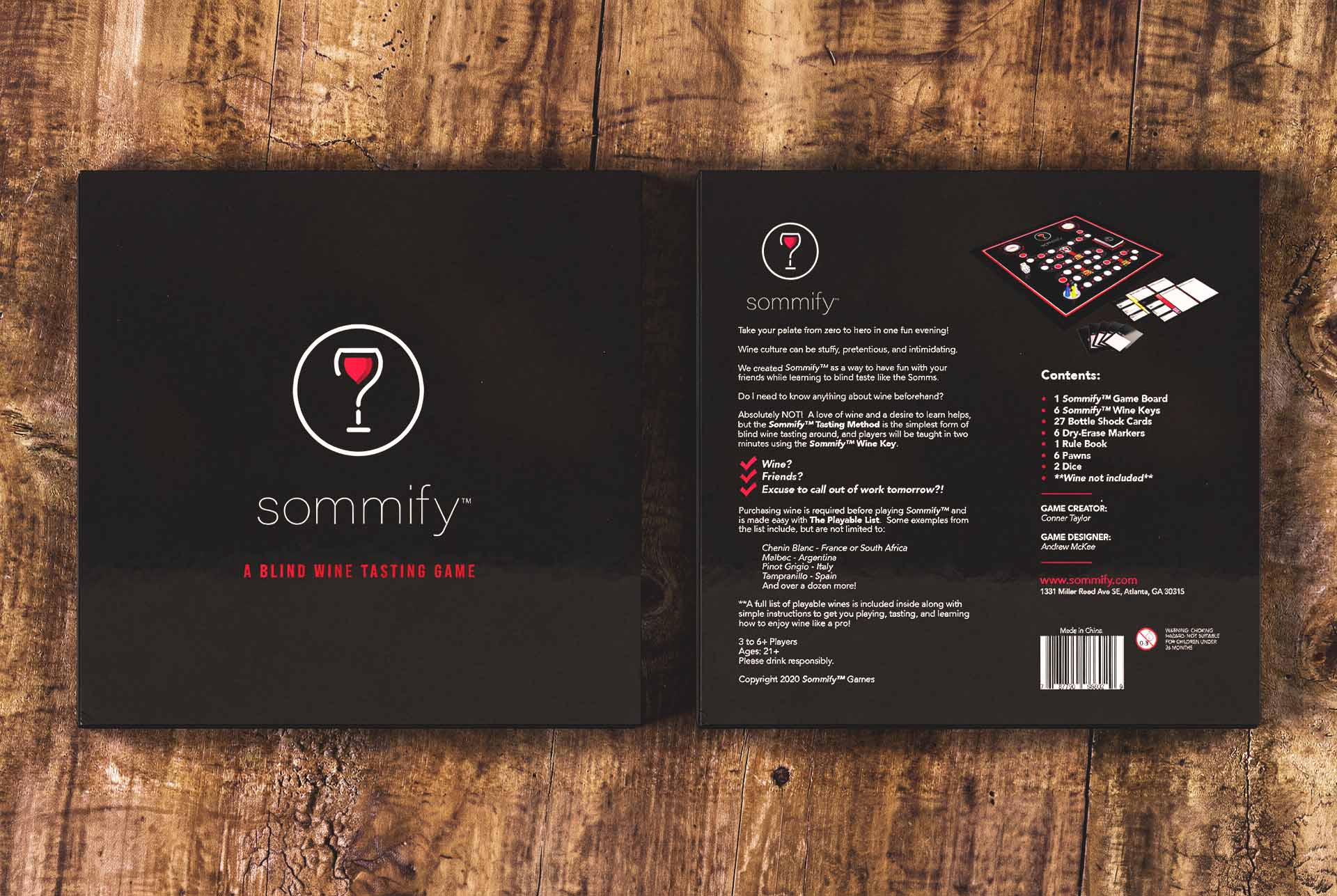
Front and back. A retail box is a six sided pitch, and the back has to answer every question a shopper has while still holding it.
A deck that teaches people what makes a wine good or bad while they are playing did not exist in the prototype. It came out of one word the founder used in passing, quark taint, and me stopping him to ask what it meant. One of the cards still carries the name.
The board is the centrepiece of the play, so it had to be something people wanted to photograph. That is not decoration. On a product that lives or dies on a crowdfunding page, it is the marketing.
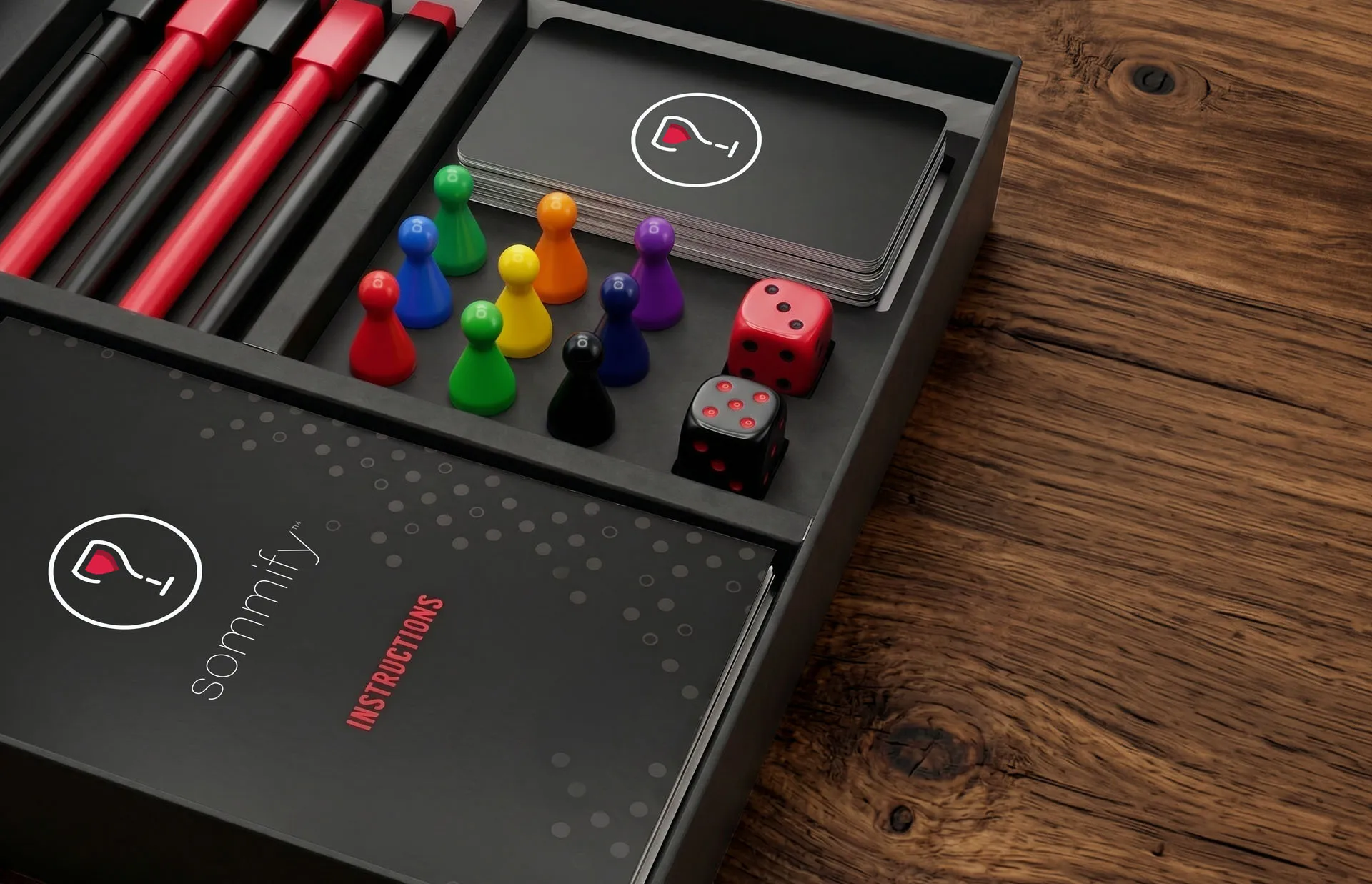
Open it and everything has a slot. Wine keys, pawns, dice, cards and the booklet, laid out so the first unboxing looks deliberate.
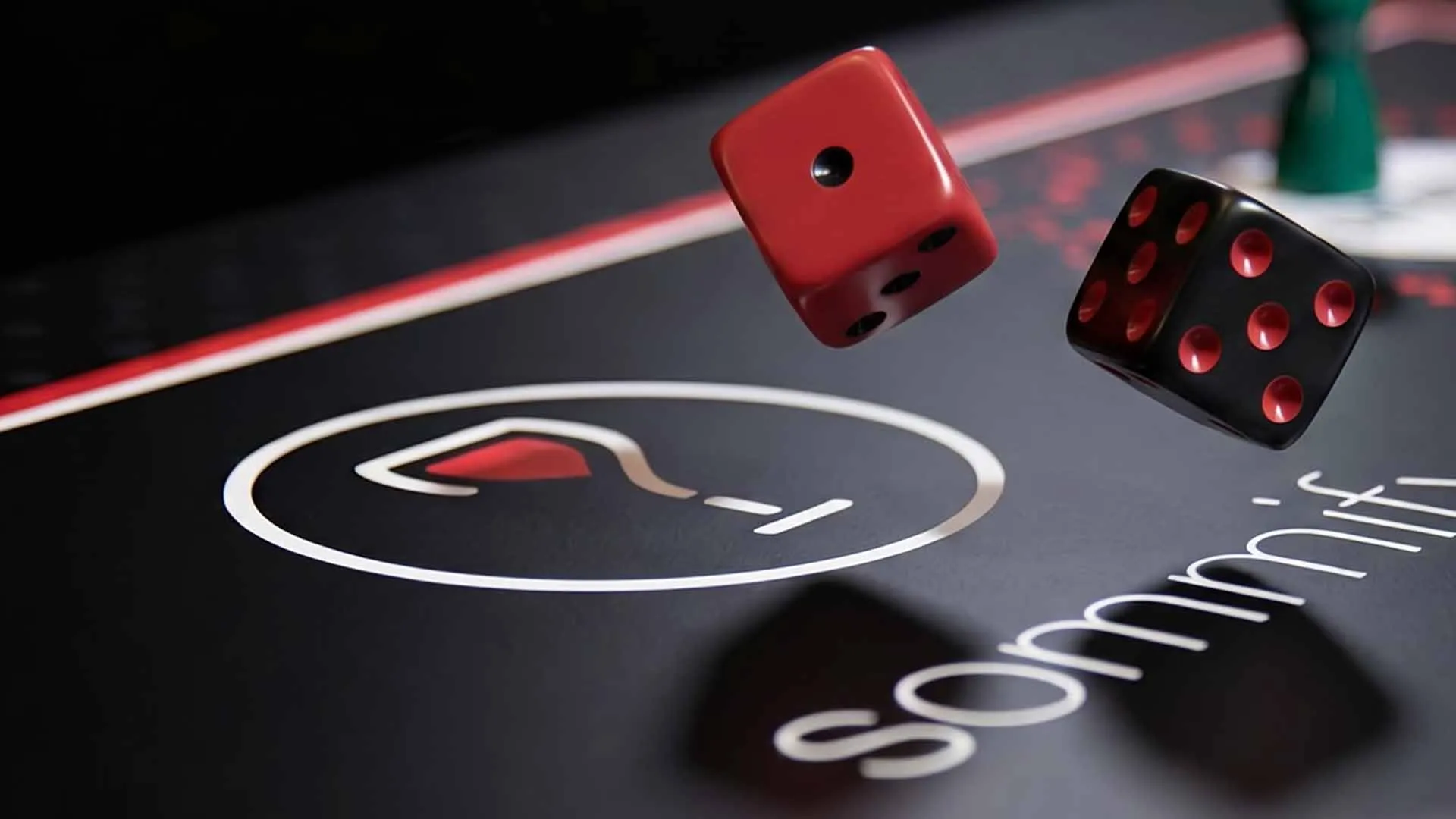
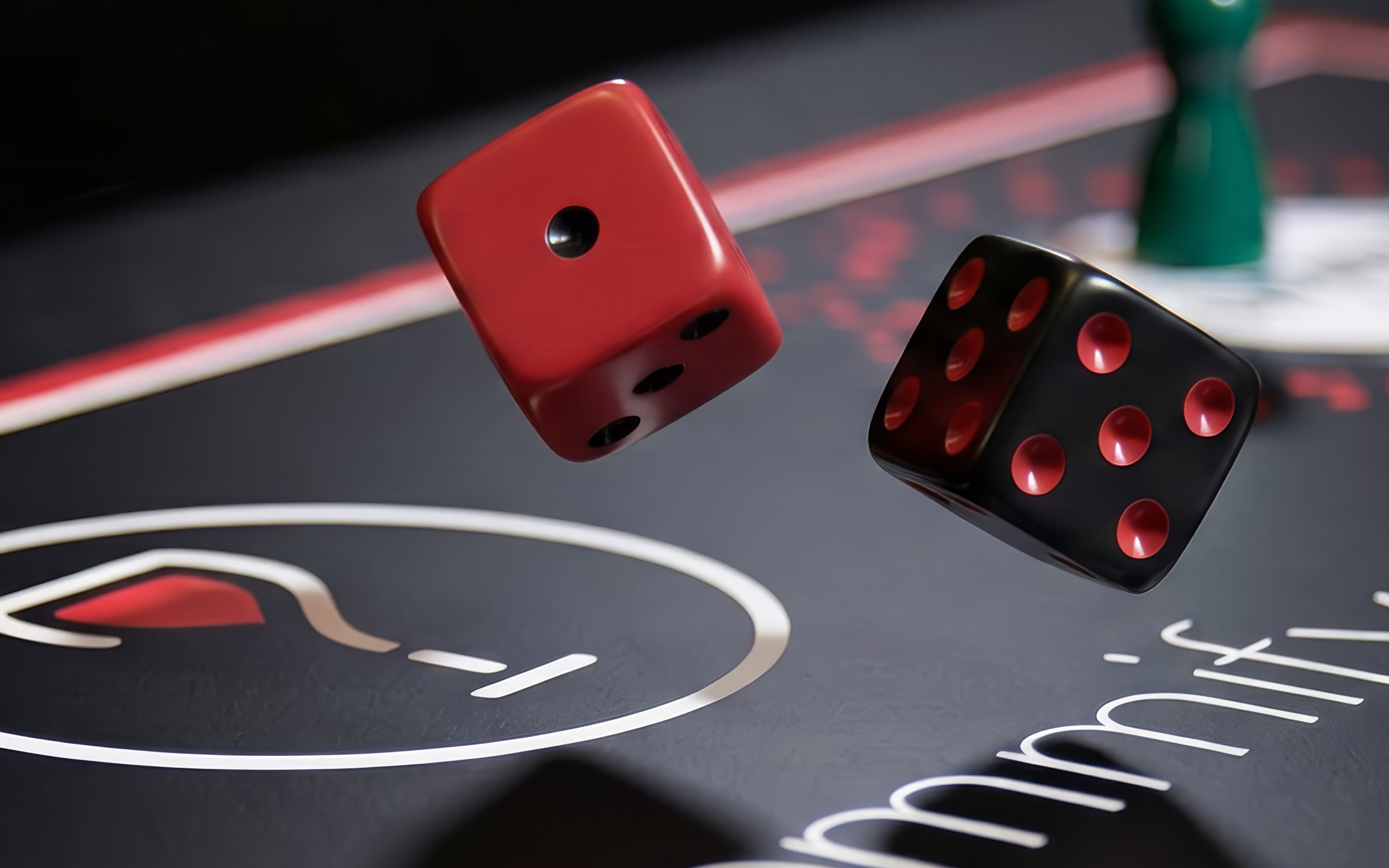
Dice mid-roll over the board. Matte black ground so the red has somewhere to land.
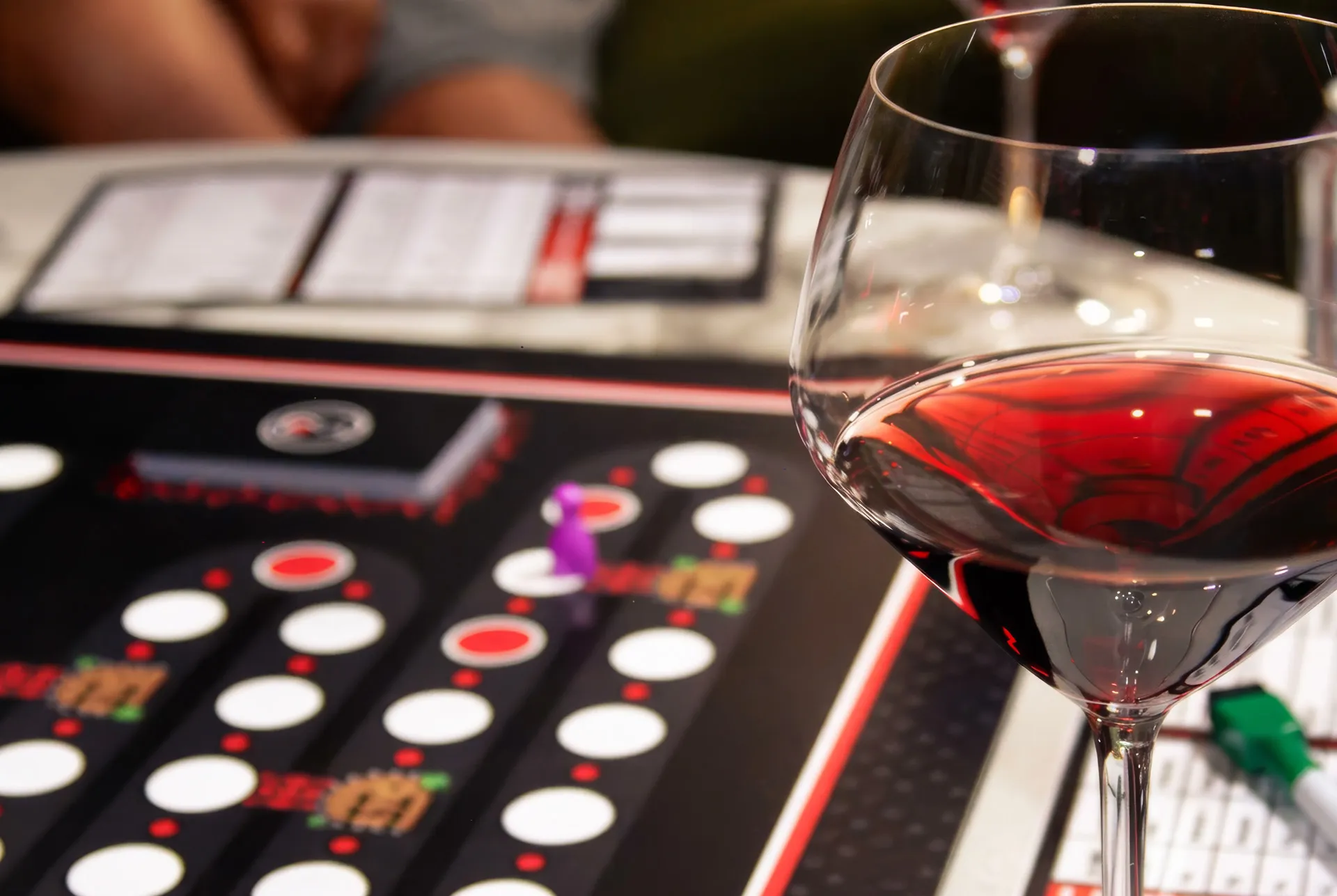
Funded in 13 hours because it looked like it deserved to be.
The film · Kickstarter
The campaign film, 2:46. This is what backers watched before they pledged.
Three films carried the campaign. One to sell the idea, one to answer the question every backer asks before pledging, and one short spot to keep the page moving.
The spots · Rules and short form
How to play, 3:07. The rules explained once, so nobody had to ask.
Crossfire, 0:31. The short spot cut for the campaign page.
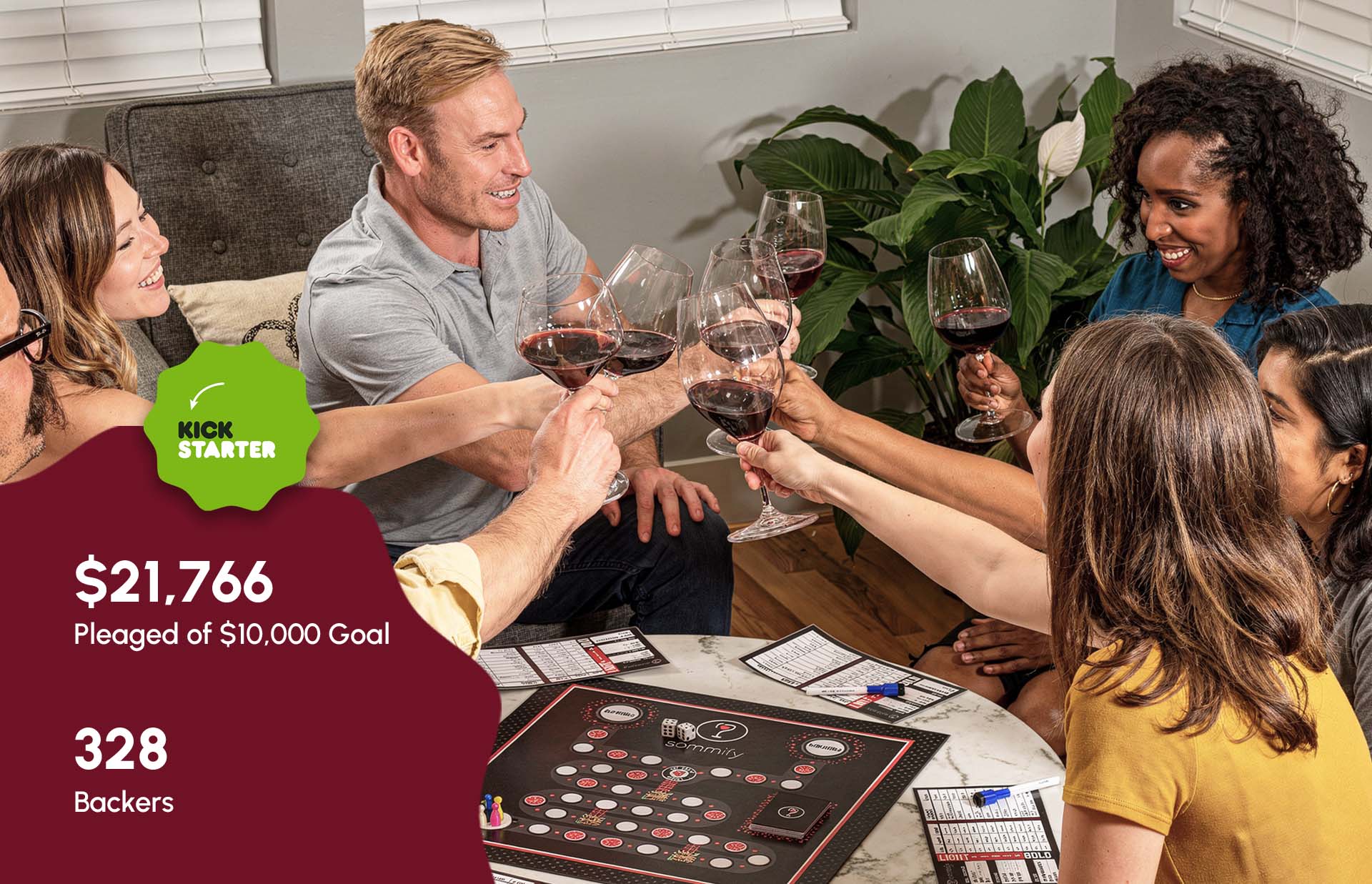
Funded on day one, in 13 hours, from 328 backers. About 3,000 units followed in year one.
Every project on this site started with an email.